Sunday, August 14, 2011

Samuel Sebastian Wesley

Today is the 201st birthday of composer Samuel Sebastian Wesley, the grandson of hymnwriter Charles Wesley. His father, also Samuel, was a composer of some renown in his day but is largely forgotten now. The elder Samuel worked to promote the music of Johann Sebastian Bach in England, and his son (whose middle name came from the German master) would do the same in his day.

Young Samuel Sebastian became a boy chorister at the
Chapel Royal at age ten. One story told of his time there claims that his singing caught the attention of King George IV, who gave him a gold watch.

He obtained his first position as an organist at sixteen at St. James Church, Hampstead Road, and over the next five years worked at three additional London churches (sometimes at more than one at a time). In 1832 he became organist at Exeter Cathedral, and would go on to serve at the cathedrals of Winchester and Gloucester. He published the book A Few Words on Cathedral Music (1849) which argued for higher standards (and therefore higher salaries) for cathedral musicians.

Wesley wrote some music for the organ, but most of his output was
choral music, both anthems and music for the service, as well as 130 hymn tunes, several of which we have already heard here.

Today's hymn is set to a tune by Wesley which appeared in
The European Psalmist (1872), a collection he edited. The text is by an unknown author, but it has been used as a gospel song with a tune by James McGranahan.

O Christ, in thee my soul hath found,
And found in thee alone,
The peace, the joy I sought so long,
The bliss till now unknown.

I sighed for rest and happiness,
I yearned for them, not thee;
But, while I passed my Savior by,
Thy love laid hold on me.

I tried the broken cisterns, Lord,
But, ah, the waters failed;
Even as I stooped to drink they fled,
And mocked me as I wailed.

Now none but Christ can satisfy,
None other Name for me!
There’s love, and life, and lasting joy,
Dear Jesus, found in thee.

Author unknown, 19th cent.; alt.
Tune:
WETHERBY (C.M.)
Samuel Sebastian Wesley, 1872

The 'broken cisterns' in stanza three are presumably those in Jeremiah 2:13.


Two Years Ago: Samuel Sebastian Wesley


Sunday, July 24, 2011

John Newton

John Newton, whose birthday we mark today, was well-known in his own time for his influential collection titled Olney Hymns (named for the parish he led) which led to many congregations taking up the singing of hymns. However, he is much more well-known today as the author of Amazing grace; many people who couldn't name any other hymnwriter know of Newton because of that hymn and the story behind it.

Today's hymn comes from the last pages of Olney Hymns, a section of short hymns labeled After Sermons (though, in fact, in Newton's own church, all his hymns were sung after the sermon as they were specifically written to accompany his preaching). It was originally a general hymn, though in more recent times it has been slightly altered to be used as a wedding hymn, in this manner.

May the grace of Christ our Savior
And our Maker’s boundless love
With the Holy Spirit’s favor,
Rest upon them from above.

Thus may they abide in union
With each other and the Lord,
And possess, in sweet communion,
Joys which earth cannot afford.

John Newton, 1779; alt.
Tune:
STUTTGART (8.7.8.7.)
Christian F. Witt, 1715
adapt. Henry J. Gauntlett, 19th cent.


Three Years Ago: John Newton

Two Years Ago:
John Newton

One Year Ago:
John Newton

Saturday, July 9, 2011

Philip P. Bliss

Gospel songwriter Philip Paul Bliss was born today in Pennsylvania in 1838. There are some accounts which claim that he really had no middle name; that his name was originally Philipp, and he decided to spell it differently by making the second "p" into a middle initial, but most modern sources believe that Paul was his true middle name.

He grew up in farm country, where he went to work in that profession as a boy of thirteen. He had little or no opportunity for exposure to music, but he did attend school as much as possible, in addition to work, and by age eighteen he was teaching school. Shortly after that, he met Lucy Jane Young and they were married in 1859. Lucy sang in her church choir and had received some musical education, and she encouraged his modest interest in music. Over the next few years he studied music more formally and discovered a talent for songwriting.

His first published (secular) song was Lora Vale, which was brought out by
George Root's company. This new career avenue was very nearly delayed when he was drafted into the Union Army, in the spring of 1865, but as the Civil War was coming to an end the order was rescinded after two weeks. The following year Philip and Lucy moved to Chicago, where he went to work for Root's publishing house conducting singing schools and musical conventions, and continued to write secular and humorous songs, some under the pseudonym of Pro Phundo Basso.

In 1870 Bliss became both the choir director and Sunday school superintendent at the
First Congregational Church of Chicago. Around this time he began to write Sunday School songs, and compiled the songbook The Charm in 1871, which included several of these songs. Over the next two years, he published three more collections.

In 1874 he joined
Ira Sankey and Dwight Moody in their evangelical meetings as a song leader and soloist, and also began writing songs for their meetings. George Stebbins, in his Reminiscences and Gospel Hymn Stories (1924), recalled:

He had a voice of rare quality and splendid volume, a baritone of extraordinary range and evenness throughout... As a leader he occupied a position of prominence by reason of native gifts and years of enterience, which, combined with an impressive personality (he was six feet tall and of commanding stature, with features as perfect as form, and eyes that were large and kindly in expression), made him into the great leader of evangelistic song that he was.

In 1874 Bliss collaborated with Ira Sankey on the first volume of
Gospel Songs, which contained this song which is still sung today.

Sing them over again to me,
Wonderful words of life,
Let me more of their beauty see,
Wonderful words of life;
Words of life and beauty,
Teach me faith and duty.

Refrain
Beautiful words, wonderful words,
wonderful words of life,
Beautiful words, wonderful words,
wonderful words of life.


Christ, the blessèd One, gives to all
Wonderful words of life;
We will list to the loving call,
Wonderful words of life;
All so freely given,
Wooing us to heaven.
Refrain

Sweetly echo the gospel call,
Wonderful words of life;
Offer pardon and peace to all,
Wonderful words of life;
Jesus, only Savior,
Sanctify forever.
Refrain

Philip P. Bliss, 1874; alt.
Tune:
WONDERFUL WORDS OF LIFE (8.6.8.6.6.6. with refrain)

During the next two years, Bliss wrote several more gospel songs (sometimes both words and music, sometimes collaborating with others), including the well-loved tune VILLE DU HAVRE for Horatio Spafford's text It is well with my soul. However, on December 29, 1876, Philip and his wife Lucy were killed in a horrific train accident in Ashtabula, Ohio while traveling back to Chicago from spending Christmas in Pennsylvania. He was reported to have escaped the crash, but returned to the burning train car to rescue her. The victims of the wreck were burned beyond recognition and were buried in a common grave in Ashtabula.

Friend and fellow songwriter
Daniel Webster Whittle compiled the Memoirs of Philip P. Bliss, a brief biography which included testimonials from many friends and collaborators, which was sold to benefit the two young sons of Philip and Lucy, only two and four years old at the time of their parents' deaths. Many of Bliss's contemporaries believed that he would have become even more accomplished and popular as a songwriter had he lived to write for thirty more years.

Today, the
Philip P. Bliss Gospel Songwriters Museum in Rome, Pennsylvania in their former family home (picture below), honors the legacy of the man and his work. Northeastern PA is not so far away from me, so it may be that a visit is in order at some point.


Three Years Ago: Henry J. Gauntlett

Two Years Ago: Henry J. Gauntlett

Tuesday, June 28, 2011

Eliza Edmunds Hewitt

Today is the 150th birthday of lifelong Philadelphian Eliza Edmunds Hewitt, a prolific writer (and sometimes composer) of gospel songs. She graduated as valedictorian of the Philadelphia Girls' Normal School and began a career as a public school teacher. However, she was injured in the classroom by an unruly student who threw a heavy slate which struck her in the back, and this caused her to be bedridden for an extended period of time (and to suffer from back pain for the rest of her life).

It was apparently during this time that she began to write poetry which came to the attention of publisher
John R. Sweney (a gospel songwrtier himself), who invited her to try writing songs. She became one of his must successful writers, and he himself supplied tunes for several of her texts.

There's a clear fountain flowing
From the heavens above,
And its waters are glowing
With the sunshine of love;
Take the blest consolation,
Jesus came to bestow,
Take the cup of salvation,
Let the joy overflow.

Refrain
O the joy! With this wondrous salvation
Be our hearts all aglow;
O the joy! Let the blessing run over,
And joy overflow.


Many hearts need the story,
Are athirst for that grace;
Go to them with Christ's glory
Shining out from your face;
Tell of Jesus your Savior!
And his mercies you know,
Show the light of his favor
Let the joy overflow.
Refrain

Be our lives freely yielded
To the Savior's command;
By his care ever shielded
And upheld by his hand;
In the pathways of sadness,
Sweetest lilies may grow;
Let us sow seeds of gladness,
Let the joy overflow.
Refrain

Eliza E. Hewitt, 1917; alt.
Tune:
OVERFLOWING (7.6.7.6.D. with refrain)
Charles H. Gabriel, 1917


Three Years Ago:
More Voices Found: Eliza Hewitt

Two Years Ago:
Frederick William Faber


Sunday, June 26, 2011

Philip Doddridge

Philip Doddridge (June 26, 1702 - October 26, 1751) is probably the third-most popular hymnwriter from the eighteenth century, behind Isaac Watts and Charles Wesley, in the number of his texts which are still sung today.

Both of his grandfathers were ministers (though he never knew them); his mother's father lived in Germany for a time and returned to England with a Luther Bible, which was passed down to Philip, who was eventually to follow in his grandfathers' profession. His mother, Monica, taught him stories from the Bible when he was a child, pointing out the scenes as painted on Delft tiles surrounding the family fireplace.

For Doddridge's previous birthdays I have used more familiar hymns, but this one is probably not so well-known. Like all his texts, it was not published during his lifetime.

O Zion, tune your voice,
And raise your hands on high;
Tell all the earth your joys,
Proclaim salvation nigh;
Cheerful in God,
Arise and shine
While rays divine
Stream all abroad.

God gilds your mourning face
With beams that cannot fade;
God's all-resplendent grace
Is poured around your head;
The nations round
Your form shall view
With luster new
Divinely crowned.

In honor to God's name
Reflect that sacred light;
And loud that grace proclaim,
Which makes the whole world bright;
Pursue God's praise
Till sovereign love
In worlds above,
The glory raise.

Philip Doddridge, 1755; alt.
Tune:
DARWALL (H.M.)
John Darwall, 1770

The church that Doddridge pastored in Northhampton for more than twenty years is still open today as the Castle Hill United Reformed Church (interior pictured below).

A note on the tune: The
Hallelujah meter, or as it is often written out, (6.6.6.6.8.8.) is not so widely used in modern hymnwriting, and overall there are fewer tunes written for it than some of the more oft-used ones. I think it could be due to the fact that there is only one truly great tune that has been written to fit that meter, the one above by John Darwall. I have used two others previously at the blog, BEVAN and SAMUEL, but neither is a good fit for these words. I looked at several others: ZEBULON was not quite right, and ST. SWITHIN was hopelessly Victorian. LAUS DEO and ST. GODRIC were both closer to the right feel, but really, if anyone was going to sing this hymn today, why would they not choose the familiar DARWALL, which is about as joyful a tune as you could want, proceeding to a powerful climax.


Three Years Ago: Philip Doddridge

Two Years Ago: Philip Doddridge

One Year Ago: Philip Doddridge


Sunday, June 19, 2011

Trinity Sunday

O Trinity of blessed light,
O Unity of sovereign might,
Whene'er the fiery sun departs,
Shed thou thy beams within our hearts.

To thee our morning song of praise,
To thee our evening prayer we raise;
Thy threefold glory we adore
Forever and forevermore.

Now to the great and sacred Three,
Creator, Christ, and Spirit be
Eternal praise and glory giv'n
By all the saints in earth and heav'n.

Ambrose of Milan, 4th cent.; tr. composite
Tune:
BROMLEY (L.M.)
Jeremiah Clarke, 1700


Three Years Ago: Trinity Sunday

Two Years Ago: Trinity Sunday

One Year Ago: Trinity Sunday


Saturday, June 18, 2011

Samuel Longfellow

Unitarian minister, hymnwriter and editor Samuel Longfellow (June 18, 1819 - October 3, 1892) was born in Portland, Maine, the younger brother of poet Henry Wadsworth Longfellow.

His first major hymnological undertaking was while he was still a student at Harvard Divinity School, when he and his friend
Samuel Johnson compiled a new hymnal for Unitarian churches, A Book of Hymns for Public and Private Devotion (1844). The book was successful, selling out and requiring a second edition two years later, which they revised and updated. Several years later the two collaborated again, publishing Hymns of the Spirit (1864), much of which they edited while on an extended European vacation.

These two books were criticized for the liberties which Longfellow and Johnson took with the hymn texts they included. They drew their material from a wide variety of sources, including the hymnals of several different denominations, and were not hesitant to alter the texts to conform to Unitarian beliefs. Longfellow explained their reasons to another Unitarian minister in a letter not long before his death.

It is the principle of adaptation to a special use which is the only justification of changes in hymns that I can offer. It is a question of using or not using which makes it needful to change (1) some verses originally written not as hymns, yet which one wants to use as such; (2) some hymns written by persons of different beliefs from those who are to use the hymn-book, phrases in which could not be conscientiously said or sing by the latter, yet which from their general value of strength, fervor, or tendeness could ill be spared. If I had been making a collection of hymns or religious poetry for private reading, I should not have altered a single word.

Nothing here is particularly unusual; as I have said many times, hymnal editors have always done this, long before Johnson and Longfellow, and right up to the present day. However, they were particularly known in their own day for their editorial changes. The sister of one of their friends,
Thomas Wentworth Higginson, wrote the following limerick:

There once were two Sams of Amerique
Who belonged to a profession called clerique.
They hunted up hymns and cut off their limbs,
These truculent Sams of Amerique.


Of course, the hymns that the two men wrote themselves did not have to be altered, though sometimes they were altered when included in later hymnals edited by others (no one gets a pass). This hymn of Longfellow's has appeared in at least a hundred collections, according to Hymnary.org.

God of the earth, the sky, the sea!
Maker of all above, below!
Creation lives and moves in thee,
Thy present life in all doth flow.

Thy love is in the sunshine's glow,
Thy life is in the quickening air;
When lightnings flash and storm winds blow,
There is thy power; thy law is there.

We feel thy calm at evening's hour,
Thy grandeur in the march of night;
And when the morning breaks in pow'r,
We hear thy Word, “Let there be light.”

But higher far, and far more clear,
Thee in our spirits we behold;
Thine image and thyself are there,
Indwelling God, proclaimed of old.

Samuel Longfellow, 1864
Tune:
DUKE STREET (L.M.)
John Hatton, 1793


Longfellow's collected texts were published after his death as Hymns and Verses (1894), edited by his niece, Alice Longfellow. They continue to appear in hymnals today, and not just Unitarian ones. I have presented a number of others over the last few years on other dates than his birthday, which you can find by clicking his tag/label below.

There is a fairly recent Longfellow biography, The Quiet Radical (2007) by Joseph C. Abdo which I have not yet read but hope to soon. And tomorrow, at least one of Longfellow's hymns will be sung in
this hymn festival in California, though I have not heard which one yet.


Three Years Ago: Samuel Longfellow

Two Years Ago: Samuel Longfellow

Sunday, June 12, 2011

The Feast of Pentecost


This ancient hymn for the day of Pentecost is used as a processional in many places, though it's not for everyone. The musical setting is a bit more complex than a standard hymn, beginning with a refrain and proceeding to two different, alternating melodies for the stanzas.

Refrain:
Hail thee, festival day!
Blest day that art hallowed forever;
Day when the Holy Spirit
Shone on the world with God's grace.


Lo! in the likeness of fire,
On them that await her appearing,
She whom the Lord foretold,
Suddenly, swiftly, descends.
Refrain

Down from the heavens she comes
With her sev'nfold mystical off'ring,
Pouring on all human souls
Infinite riches of God.
Refrain

Hark! in a hundred tongues
Christ's own, the chosen Apostles,
Preach to a hundred tribes
Christ and his wonderful works.
Refrain

Praise to the Spirit of life,
All praise to the Fount of our being,
Light that dost lighten all,
Life that in all dost abide.
Refrain

God the Almighty, who fillest
The heav'n, the earth and the ocean,
Guard us from harm without,
Free us from evil within.
Refrain

God, who art Giver of all
Good gifts and lover of concord,
Pour thy balm on our souls,
Order our ways in thy peace.
Refrain

Venantius Fortunatus, 6th cent.;
tr. Gabriel Gillett, 1906; alt.
Tune:
SALVE, FESTA DIES
Ralph Vaughan Williams, 1906


The original Latin text Salve, festa dies (Hail thee, festival day) by Venantius Honorius Fortunatus is much longer, and there are other modern hymns also taken from it for Easter and Ascension. It became popular in his time and stanzas were added by others over time. In fact, much of this Pentecost text is apparently not by Fortunatus, but derives from a later medieval version used as a Pentecost precessional in York.


Three (Liturgical) Years Ago: The Feast of Pentecost

Two (Liturgical) Years Ago:
The Feast of Pentecost

One (Liturgical) Year Ago:
The Feast of Pentecost

One (Calendar) Year Ago:
Harriet Martineau

Friday, June 10, 2011

Minot Judson Savage

Minot Judson Savage was born on this day in 1841 in the small town of Norridgewock, Maine (which certainly sounds like an interesting place to be born). His family were committed New England Congre-gationalists, and he attended the Bangor Theological Seminary and was ordained in the Congregational Church upon his graduation in 1864. He had served a year in the Christian Commission during the Civil War, and now he was sent to California as a missionary, returning in 1867 to pastor a church in Framingham, Massachusetts.

His views and beliefs changed over time, and in 1873 he resigned from his pastorate in Hannibal, Missouri and became a Unitarian minister. Over the next thirty years he led congregations in Chicago and Boston, and was finally the associate pastor of the
Church of the Messiah in New York City (now the Community Church).

He championed the causes of progressive Christianity in his day, including comparative religion and modern biblical criticism. His 1876 book The Religion of Evolution, less than a quarter century after Darwin's theory was published, was very influential. Many of his sermons were published, and he also wrote poetry and hymns.

While in Boston he began compiling a hymnal for the use of his own church, as he was not satidfied with the available choices, but when this became known he was encouraged to publish it for wider cicculation.
Sacred Songs for Public Worship appeared in 1883. This book included several of his own hymns, and in 1899 several more were collected with those, published as Hymns by Minot Judson Savage. These texts follow his particular themes, bearing titles such as Evolution, Education, and All Truth Leads to God.

His thoughts on the hymnwriting process may be gleaned from a verse on the title page of the later collection.


But one hymn let me write
Which men will keep alive
For strength and hope and light
As up and on they strive,
And I will ask no more of fame;
For loving hearts will love my name.


His hymn O star of Truth, down shining still appears in the latest Unitarian hymnal, Singing the Living Tradition (1993), and while it is not more widely known in other denominations, that may be enough for Savage. In looking through his later collection, this one caught my eye for today.

New blessings ev'ry morning,
New blessings still at eve,
Our lives with mercy crowning,
We as thy gift receive.
As are the stars in number,
As are the seashore sands,
So many are the bounties
Still flowing from thy hands.

But of thy gifts the sweetest,
Divinest is that we,
Our own small needs forgetting,
May work and give like thee.
The world and all it's sorrows
Our hearts, like thine, can feel,
And we, as thy co-workers,
Can trust and hope and heal.

Then to this holy mission
We pledge ourselves anew:
We give our minds to seeking,
Our hearts to love, the true.
So, grateful for thy goodness,
We join with thee to prove
All service shows thy teaching:
The way of life is love.

Minot Judson Savage, 1890; alt.
Tune:
LAUFER (7.6.7.6.D.)
Emily Swan Perkins, 1924


The footnotes indicate that this hymn was written for a meeting of the New York League of Unitarian Women in December of 1890, so it seems appropriate to match it with a tune by Emily Swan Perkins, as the original tune to which it was sung is unrecorded.

Savage retired from the Church of the Messiah in 1906 due to poor health, but he remained active in the American Unitarian Association. He died in Boston on May 22, 1918, while attending a national Unitarian conference.


Three Years Ago: Saint Ephrem

Monday, June 6, 2011

Sir John Stainer

Sir John Stainer (June 6, 1840 - March 31, 1901) was one of the most well-known English church musicians of his time. Though he wrote many hymn tunes, anthems and service music, not many of them are still in use today. His one enduring work was an oratorio, The Crucifixion: A Meditation on the Sacred Passion of the Holy Redeemer (to give the full title), words by William J. Sparrow-Simpson, which was first performed on February 24, 1887, which was the day after Ash Wednesday. This work is still often performed by church choirs all over the world.

Of particular interest here is that there are six hymns interspersed between the choral movements, which were intended to be sung by the audience/congregation. At least two of the tunes of these hymns by Stainer have retained some life of their own, ALL FOR JESUS and CROSS OF JESUS.

But by far the most well-known section of The Crucifixion is God so loved the world, which has been sung by thousands of choirs who would never sing the entire work. The video below is the choir of St. Paul's Cathedral in London, where Stainer both sang as a boy chorister, and served for many years as organist.


God so loved the world
That he gave his only-begotten Son
That whoso believeth, believeth in him
Should not perish, but have everlasting life.
For God sent not his Son into the world to condemn the world
But that the world through him might be saved.

John 3:16-17


Three Years Ago:
Sir John Stainer

One Year Ago: Sir John Stainer


Sunday, June 5, 2011

Seeking Thee Beyond the Skies


The Feast of the Ascension, forty days after Easter (and thus always a Thursday), is often moved to the Sunday after.

Hail the day that sees him rise, Alleluia!
Glorious to his native skies, Alleluia!
Christ, awhile to mortals given, Alleluia!
Enters in the highest heaven, Alleluia!

Circled round with angel pow'rs, Alleluia!
Their triumphant Lord, and ours, Alleluia!
There the glorious triumph waits, Alleluia!
Lift your heads, eternal gates, Alleluia!

See! He lifts his hands above, Alleluia!
See! He shows the prints of love, Alleluia!
Hark! His gracious lips bestow, Alleluia!
Blessings on the church below, Alleluia!

Grant our hearts may thither rise, Alleluia!
Seeking thee beyond the skies, Alleluia!
Ever upward let us move, Alleluia!
Wafted on the wings of love, Alleluia!

There we shall with thee remain, Alleluia!
Partners of thy endless reign, Alleluia!
There thy face unclouded see, Alleluia!
Find our heav'n of heav'ns in thee, Alleluia!

Charles Wesley, 1739; alt.
Tune:
LLANFAIR (7.7.7.7. with Alleluias)
Robert Williams, 1817;
harm. John Roberts, 1837


Short entry today as I am off to NYC to sing a performance of Haydn's Creation in a memorial concert fot Johannes Somary, a famed choral conductor who died earlier this year, with a chorus of 200.


Three Years Ago: The Feast of the Ascension

Two Years Ago:
The Feast of the Ascension

One Year Ago:
The Feast of the Ascension


Friday, June 3, 2011

Charles H. Steggall

British composer Charles Steggall (June 3, 1826 - June 7, 1905) was born in London, where he was to remain the rest of his life. He studied at the Royal Academy of Music under William Sterndale Bennett, and later became the chief professor of the organ there from 1851 to 1903. It's claimed that he taught more organists than anyone else in England in the second half of the nineteenth century.

His own career as an organist spanned several London churches, particularly
Lincoln's Inn Chapel, where he served from 1864 until his death. He began writing hymn tunes and worked as musical editor on two early collections: Church Psalmody (1849) and Hymns for the Church of England (1865).

In 1889, after the death of
William H. Monk, Steggall succeeded him as musical editor of Hymns Ancient and Modern. Unfortunately, the next published edition, in 1904, was not popular, considered to be too severe in its changes.

Unlike many of his Victorian age counterparts in church music, who wrote at least one or two tunes that we still sing today, Steggall's tunes (a few of which you can hear at the Cyber Hymnal site) have not survived well. I liked this one, which was written fairly late in his career and apparently was first published in this country in the Presbyterian Hymnal of 1933 matched with O holy city, seen of John.

Beyond, beyond the boundless sea,
Above the dome of sky.
Farther than thought itself can flee
Thy dwelling is on high;
Yet dear the blissful thought to me
That thou, my God, art nigh!

We hear thy voice when thunders roll,
Through the wide fields of air;
The waves obey thy firm control,
Yet still thou art not there;
Where shall I find thee present, God.
Who yet is everywhere?

O, not in circling depth or height,
But in the conscious breast,
Present to faith, yet veiled to sight,
There doth thy Spirit rest;
O come, thou Presence infinite,
And make thy people blest!

Josiah Conder, 1824; alt.
Tune:
MORWELLHAM (8.6.8.6.8.6.)
Charles H. Steggall, 1890


One Year Ago: Brian Wren


Sunday, May 29, 2011

Our Hymn of Grateful Praise


Rogation Sunday, a time to mark the changing season and our thanks for the good things of the earth is celebrated in some churches on the last Sunday of the Easter season. Today's hymn is probably still found in nearly every modern hymnal, as it has been for the last century and longer.

For the beauty of the earth,
For the glory of the skies,
For the love which from our birth
Over and around us lies,

Refrain:
Source of all, to thee we raise
this our hymn of grateful praise.


For the beauty of each hour
Of the day and of the night,
Hill and vale, and tree and flow'r,
Sun and moon, and stars of light,
Refrain

For the joy of ear and eye,
For the heart and mind's delight,
For the mystic harmony
Linking sense to sound and sight,
Refrain

For the joy of human love,
Brother, sister, parent, child,
Friends on earth, and friends above,
For all gentle thoughts and mild,
Refrain

For each perfect gift of thine
to all people freely giv'n,
Graces human and divine,
Flowers of earth and buds of heav'n,
Refrain

Folliott Sandford Pierpoint, 1864; alt.
Tune: DIX (7.7.7.7.7.7.)
Conrad Kocher, 1838


Folliott Pierpoint, a native of Bath in England, reportedly wrote this text after returning from a walk on a fine spring day. Though the hymn is widely used, it is also widely altered; it almost seems that every hymnal editor who has chosen to include it has changed something in the text. Even the well-known last line of the refrain, which I used above as the title, was originally "this our sacrifice of praise." There are also three additional stanzas:

For thy Bride that evermore
Lifteth holy hands above,
Off'ring up on every shore
This pure sacrifice of love,

For the martyrs' crown of light,
For thy prophets' eagle eye,
For thy bold confessors' might,
For the lips of infancy,

For thy virgins' robes of snow,
For thy maiden Mother mild,
For thyself, with hearts aglow,
Jesus,Victim undefiled,

The first of these is sometimes used, altering "Bride" to "Church," but the other two have disappeared completely. I suppose the assumption is that they don't go with the theme of God in Nature, though that wasn't really Sandford's original theme.

DIX is a German tune that was named at some later date in English hymnals when the tune came to be widely matched with
an Epiphany hymn by poet William Chatterton Dix.


Two Years Ago: Kindly Earth with Timely Birth

One Year Ago: Earth Feels the Season's Joyance

Sunday, May 15, 2011

Streams For Thirsting Souls

Today is Good Shepherd Sunday in many churches and if yours is one of them you have probably already heard more than one version of Psalm 23 either read aloud or sung, and a sermon on top.

There are many hymn texts derived from this psalm; some of which we have already seen here (click on the tag below). Two of the most familiar of them
were listed last year on one grouping of "the ten best" hymns. Here's one more for today, and I think I could go on for several more years with one more each year.

I shall not want: in deserts wild
Thou spread’st a table for thy child;
While grace in streams for thirsting souls,
Thro’ earth and heav'n forever rolls.

I shall not want: my longest night
Thy loving smile shall fill with light;
While promises around me bloom,
And cheer me with divine perfume.

I shall not want: thy righteousness
My soul shall clothe with glorious dress;
My heav'nly robe shall be more fair
Than garments kings or angels wear.

I shall not want: whate’er is good,
Of daily bread or angels’ food,
Shall to my longing heart be sure,
So long as earth and heav'n endure.

Charles F. Deems, 1872; alt.
Tune:
CANONBURY (L.M.)
Robert Schumann, 1839, adapt.

Charles Force Deems led the Church of the Strangers in New York City when he wrote this hymn. It was a nondenominational Protestant congregation, founded in part by a $50,000 gift fron philanthopist Cornelius Vanderbilt, and its pastor was feeling a bit overwhelmed with the many individual needs of his parishioners. Meditating on those concerns, the words "I shall not want" from the psalm spoke to him most directly and the hymn soon followed.

The tune CANONBURY which still appears in many hymnals is arranged from a melody by the German composer Robert Schumann in his solo piano work Nachtstucke, Opus 23 No. 4.


Two Years Ago: Samuel Webbe


One Year Ago: Austin C. Lovelace


Sunday, May 8, 2011

Now You Live Forever


Low in the grave you lay,
Jesus, my Savior,
Waiting the coming day,
Jesus, my Love!

Refrain
Up from the grave you arose,
With a mighty triumph o’er your foes,
You arose a victor from the grave's domain,
Now you live forever, with the saints to reign.
You arose! You arose!
Hallelujah! You arose!

Vainly they watch your bed,
Jesus, my Savior;
Vainly they seal the dead,
Jesus, my Life!
Refrain

Death cannot keep its prey,
Jesus, my Savior;
You tore the bars away,
Jesus, my Lord!
Refrain

Robert Lowry, 1874; alt.
Tune:
CHRIST AROSE (6.5.6.4. with refrain)

The sound file doesn't quite capture the usual distinction between the short stanzas, generally played and sung quite slowly and heavily, in contrast to the longer, quicker joyful refrain.

Baptist minister Robert Lowry reportedly wrote this song during the Easter season of 1874, and it was published the following year in Brightest and Best, a collection he helped compile in his caopacity as musical editor at Biglow & Main, which was becoming the largest publisher of Sunday school music and gospel songs in the last quarter of the nineteenth century.

This Easter song went on to many other nondenominational songbooks as well as denominational hymnals around the world, well into the twentieth century and beyond, including the British Methodist Hymn-Book (1933) and (a late arrival) in the US Methodist Hymnal of 1964. Even more recently it has been included in the Congregational Hymns for a Pilgrim People (2007) and the Baptist Celebrating Grace (2010). The Guide to United States Popular Culture (2001) even lists it as one of the most popular Easter songs, alongside Irving Berlin's Easter Parade (!) -- I'd like to see which one would really come out on top if you asked a hundred people.


Three Years Ago: Julian of Norwich

Three Years Ago: Mother's Day

Sunday, May 1, 2011

Not Faithless, But Believing Be


On the Second Sunday of Easter, many churches will hear the story of the disciple Thomas (from John 20: 24-29), who was not with the others the first time they saw Jesus after the Resurrection, and would not believe the story until he had seen his friend for himself. I like to remind people that the other disciples didn't believe the story either when Mary first told them the week before (Luke 24: 1-11), but somehow Thomas is the one who gets scolded for it and held up as a bad example.

This sixteenth century hymn, originally written in Latin by the French Franciscan monk
Jean Tisserand, takes us from the Resurrection to the story of Thomas. The translation most often sung today is by John Mason Neale which first appeared in his Mediaeval Hymns and Sequences (1851). The tune is even older, but it is the one that has always been used with this text -- it's rare that a text/tune combination lasts for more than five hundred years, as we have seen.

Alleluia! Alleluia! Alleluia!

O sons and daughters, let us sing!
Tis Jesus Christ, whose tale we bring,
O'er death today rose triumphing.
Alleluia!

That Easter morn, at break of day,
The faithful women went their way
To seek the tomb where Jesus lay.
Alleluia!


An angel clad in white they see,
Who sat, and spake unto the three,
“Your friend has gone to Galilee.”
Alleluia!

That night th’apostles met in fear;
Amidst them came their friend most dear,
And said, “My peace be on all here.”
Alleluia!

When Thomas first the tidings heard,
How they had seen the risen Lord,
He doubted the disciples’ word.
Alleluia!

“My piercèd side, O Thomas, see;
My hands, my feet, I show to thee;
Not faithless, but believing be.”
Alleluia!

No longer Thomas then denied;
He saw the feet, the hands, the side;
“Thou art my Lord and God,” he cried.
Alleluia!

How blessed are they who have not seen,
And yet whose faith has constant been;
For they eternal life shall win.
Alleluia!

On this most holy day of days
To God yur hearts and voices raise
In laud and jubilee and praise.
Alleluia!


Alleluia! Alleluia! Alleluia!

Jean Tisserand, 1525;
tr. John Mason Neale, 1851; alt.
Tune:
O FILII ET FILIAE (8.8.8. with Alleluias)
French melody, 15th cent.

The original melody has not survived completely unaltered; your hymnal may well have something a but different. The triple Alleluia most often is sung at the beginning and the very end, though some arrangements over the years have inserted it between each stanza. And, of course, most hymnals today do not include all nine stanzas.


P.S. - The illustration above is from The Incredulity of Saint Thomas, c. 1604 (not far from the origin of this hymn), by the Dutch painter Hendrick ter Brugghen.


Two Years Ago: Saint Philip and Saint James

One Year Ago: Joseph Addison

Thursday, April 28, 2011

Hymns in the News

Even here you cannot escape the Royal Wedding Mania that has infected much of the world for the last few weeks. Today the music that will be sung and played during tomorrow's service at Westminster Abbey was announced to the media.

However, the broader and more long-range importance of the wedding music chosen by Kate and Wills will be understood by church musicians everywhere, because brides will want some of the same selections for their own ceremonies this summer and for years to come. The Prince of Denmark's March by Jeremiah Clarke became the fashionable processional after its appearance at the 1981 wedding of Charles and Diana. Somehow I do not see I was glad, an anthem by C.H.H. Parry, and tomorrow's processional, becoming equally popular (how many weddings today have a choir?), but the Fantasia on 'Greensleeves' of Ralph Vaughan Williams might be heard more often.

(That said, I will be singing in a wedding this Saturday, but the musical couple are two section leaders of our church choir, and the groom has composed the music for the Anglican chant to which we will sing the psalm. But I doubt they would have chosen I was glad for their processional, either, even if they had known about this.)

So tomorrow's hymns, like the rest of the music, will be British.

Guide me, O thou great Redeemer is assumed to be a tribute to Diana, at whose funeral it was sung.

Love divine, all loves excelling will be sung to BLAENWERN, as it often is in the UK and rarely is in the US.

Jerusalem (And did those feet in ancient times), also composed by Parry, is one of those songs that the British consider a hymn, but not everyone else does. (The corresponding "hymn" at Charles and Diana's wedding was I vow to thee, my country).

You could dismiss the hymn selections as no more than interesting trivia (like the fact that the other hymn in the 1981 royal wedding was Christ is made the sure foundation) but remember that they will be heard tomorrow by millions of people around the world. Some may even be singing along.

Friday, April 22, 2011

Good Friday


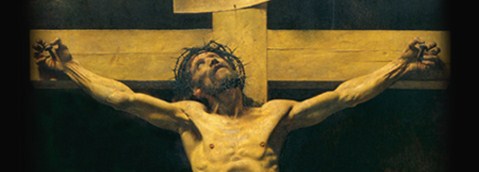
When I survey the wondrous cross
On which the Prince of Glory died,
My richest gain I count but loss,
And pour contempt on all my pride.

See from his head, his hands, his feet,
Sorrow and love flow mingled down!
Did e’er such love and sorrow meet,
Or thorns compose so rich a crown?

Were the whole realm of nature mine,
That were an off'ring far too small;
Love so amazing, so divine,
Demands my soul, my life, my all.

Isaac Watts, 1707
Tune:
ROCKINGHAM (L.M.)
Edward Miller, 1790


(#2 in The Best Church Hymns of 1899 and still fairly high on most lists today)


Two Years Ago: Good Friday

One Year Ago: Good Friday

Thursday, April 21, 2011

Maundy Thursday


Today we remember the final night that Jesus spent with his friends before his death and the events of their evening together as they gathered for a meal. That Last Supper has been depicted in art and poetry in many different ways (such as the painting above by Tintoretto).

Today's hymn is inspired by just one verse in the Gospel story of the day.
Matthew 26:26-30 recounts the disciples' gathering, and ends with "And when they had sung a hymn, they went out to the Mount of Olives." This text by Frances Ridley Havergal, part of a longer poem, imagines that the hymn they sang together, the last time they would sing before Jesus died, must have been something very unique.

Within an upper room they met,
A small, yet faithful band,
On whom a deep, yet chast'ning grief
Had laid its soft'ning hand.
Disciples seated 'round have heard
Their friend and Savior tell
That he with them no longer now
As heretofore may dwell.

The hour is come, but ere they meet
Its terrors, yet once more
Their voices blend with his who sang
As none e'er sung before.
Why do they linger on that note?
Why thus the sound prolong?
Ah! 'Twas the last, 'tis ended now,
That strangely solemn song.

And forth they go, the song is past;
But like the roseleaf, still,
Whose fragrance does not die away,
Its soft, low echoes thrill.
Through many a soul, and there awake
New strains of glowing praise
To Christ who, on that fateful eve,
That last sweet hymn did raise.

Frances Ridley Havergal, 1855; alt.
Tune:
PENMAENMAWR (C.M.D.)
Sarah G. Stock, 1887


It's unlikely that this hymn would find its way into a service nowadays, dealing as it does with such a small part of the Passion story, but it's the part we celebrate here, of singing hymns together.

Sarah Geraldina Stock wrote both hymn tunes and texts, as well as several popular books for children on religious subjects. PENMAENMAWR (named for the town in Wales where she lived) seems like a tune that's just as unusual as this text, so they made a good pairing.


Three Years Ago: Maundy Thursday

Two Years Ago: Maundy Thursday

One Year Ago: Maundy Thursday

Sunday, April 17, 2011

Hosanna in the Highest

Come, faithful people, come away,
Your homage unto Jesus pay;
It is the feast of palms today;
Hosanna in the highest!

Go, Savior, thus to triumph borne,
Thy crown shall be the wreath of thorn,
Thy royal garb the robe of scorn:
Hosanna in the highest!

They thronged before, behind, around,
They cast palm branches on the ground,
And still rose up the joyful sound:
Hosanna in the highest!

Thus, Savior, to thy passion go,
Arrayed in royalty of woe,
Assumed for people here below:
Hosanna in the highest!

Gerard Moultrie, 1867; alt.
Tune: GREENWELL (8.8.8.7.)
William J. Kirkpatrick, 1885


Friday, April 15, 2011

Lelia Naylor Morris

Gospel song writer Lelia Naylor Morris was born today in 1862. After the death of her father, her mother opened a millinery shop in McConnelsville, Ohio, to support the family and Lelia learned to sew there. She also showed an early interest in music, and practiced the piano at a neighbor's house because her family could not afford one. By age twelve she was playing the organ for local prayer meetings.

She did not begin writing and composing gospel songs until she was thirty, ten years after her marriage to Charles H. Morris. She has been working as a seamstress, but her long association with church music both as a singer and an organist probably led her to composition. She reportedly kept a pad of paper nearby to write down the texts as inspiration struck, and she composed the music at the organ of the Trinity Methodist Episcopal Church in McConnellsville where she served for many years as organist.

She would eventually write more than a thousand gospel songs, and many early twentieth century hymnbooks contain more than a dozen of them (always credited to Mrs. C. H. Morris).

Do we live so close to the Lord today,
Passing to and fro on life’s busy way,
That the world in us can a likeness see
To the Christ of Calvary?

Refrain
Can the world see Jesus in me?
Can the world see Jesus in you?
Does your love to him ring true,
And your life and service, too?
Can the world see Jesus in you?


As an open book they our lives will read,
To our words and acts giving daily heed;
Will they be attracted, or turn away
From the Christ of Calvary?
Refrain


Lelia Naylor Morris, 1917; alt.

Tune:
CHRIST'S EXAMPLE (10.10.10.7. with refrain)

Morris lost her eyesight in later years but found various ways to continue writing songs. Her songs traveled around the world; during her lifetime several of them were translated into various languages and used by Methodist missionaries (including one of her daughters).


Two Years Ago:
Lelia Naylor Morris


Tuesday, April 12, 2011

Felice di Giardini

Italian composer Felice di Giardini (April 12, 1716 - June 8, 1796) was born in Turin. Showing musical talent at an early age, his father sent him to Milan to study voice, harpsichord, and violin. He became renowned as a violin virtuoso and played in opera orchestras in Rome and Naples beginning at age 12.

In an early encounter with a famous composer, di Giardini was the assistant concertmaster in a Teatro San Corlo performance of an opera by Niccolo Jommelli wherein he played his own elaborate ornamentations and variations on the violin part, which earned him a public slap in the face from the composer. He later called this incident "the most instructive lesson I ever received from a great artist."

In the 1750s di Giardini toured Europe as a violinist, eventually settling in England after successes in Paris and Berlin. He became the director of the Italian Opera Company in London and continued to perform as a solo artist in concerts arranged by Johann Christian Bach, who became a close friend. He was also the director of the Three Choirs Festival (which is still in operation today) for six years beginning in 1770.

He composed in many different musical forms, but focused primarily on opera and chamber music. Very little of his music is known today, though some solo songs and string trios are still in print.

However, one of his hymn tunes remains in nearly every hymnal published up to the present. During his time in London he was asked by the Countess of Huntingdon, a well-known evangelical leader, to contribute tunes to a hymnal she was sponsoring. In 1769 this Collection of Psalm and Hymn Tunes was published, edited by Martin Madan and benefiting London's Lock Hospital. Four of its tunes were written by di Giardini, including this most famous one.

Come, mighty Giver of Life,
Calm thou our discord and strife;
Help us to praise!
Maker, whose love unknown,
All things created own,
Build in our hearts thy throne,
Ancient of Days!

Come, thou incarnate Word,
By heav'n and earth adored,
Our prayer attend!
Come, and thy people bless;
Come, give thy Word success,
'Stablish thy righteousness,
Savior and Friend!

Spirit of truth and love,
Life-giving, holy Dove,
Come down this hour!
Move on the water's face,
Bearing the gifts of grace;
Fly to earth's farthest place,
Spirit of power!

To thee, great One in Three,
Our highest praises be,
Hence, evermore!
Thy sov'reign majesty
May we in glory see,
And to eternity
Love and adore!

Text Composite, 18th & 19th cent.
Tune: ITALIAN HYMN (6.6.4.6.6.6.4.)
Felice di Giardini, 1769


There are several small variations in the melody that have crept in over the last two centuries; the one in your hymnal may not match this one completely. ITALIAN HYMN seems like an obvious name, but it is also sometimes known as MOSCOW, which is the city where di Giardini died in 1796, sadly in poverty. His fame turned out not to last even through his lifetime; while he was once known throughout Europe, painted by famous artists such as Sir Joshua Reynolds (above) and John Francis Rigaud (below), he went back to Italy for a few years in 1784 and suffered some financial setbacks. Returning to England in 1793 he found that he was no longer in favor with the public and eventually left for Russia, where he was also unsuccessful.


P.S. - This is post #500.