Showing posts with label Episcopal. Show all posts

Saturday, April 20, 2019

Gleams of Eternity Appear


As another Holy Week comes to a close...

Sunset to sunrise changes now,
For God has made the world anew;
On the Redeemer's thorn-crowned brow,
The wonders of that world we view.

E'en though the sun withholds its light
Lo! a more heav'nly lamp shines here,
And from the cross, on Calvary's height,
Gleams of eternity appear.

Here in o'erwhelming final strife
The Lord of Life has victory,
And sin is slain, and death brings life,
And earth inherits heaven's key.

Clement of Alexandria, 3rd cent.;
para. Howard Chandler Robbins, 20th. cent.; alt.
Tune: KEDRON (L.M.)
attrib. Elkanah Kelsay Dare, 19th cent.

Saint Clement of Alexandria (c.150-c.215) was originally Titus Flavius Clemens, a Greek theologian and a convert to Christianity who became the intellectual leader of the Christian community in Alexandria. His sainthood was revoked by the Roman Catholic Church in the sixteenth century, but he remains revered in Anglicanism, as well as the Coptic and Ethiopian branches of Christianity.

Howard Chandler Robbins (1876-1952) was ordained to the Episcopal priesthood in 1904 and served parishes in New York and New Jersey before serving as dean of the Cathedral of St. John the Divine in Manhattan from 1917-1929. Following that position, he became a professor at the (Episcopal) General Theological Seminary. He was a member and was eventually made a Fellow of the Hymn Society of America, as well as a member of the Society of Mayflower Descendants. He served on the committee that produced the Episcopal Hymnal 1916, and several of his hymns (including today's paraphrase) appear in the subsequent Hymnal 1940. My own particular favorite of his hymns is Put forth, O God, thy Spirit's might, for which he also composed the tune CHELSEA SQUARE, one of the finest tunes of the twentieth-century, in my opinion.

One of the earliest published American composers, Elkanah Kelsay Dare (1782-1826), was also a Presbyterian minister who was pastor of the Union Presbyterian Church in Colerain Township (now Kirkwood), Pennsylvania (his middle name is sometimes given as Kelsey). His ten hymn tunes appeared in the Repository of Sacred Music, Part Second (1813) edited by John Wyeth.  (The most well-known tune that also appeared in that volume is NETTLETON, which everyone here has undoubtedly sung.)


P.S. - While putting this entry together, it occurred to me that the tune ST. CLEMENT is also a Long Meter tune, so I tried to match this text with that Anglican tune (suggestive of the original author) but sadly the word stresses don't line up correctly. And anyway, it appears that KEDRON is the only tune used for this text in the thirteen hymnals where it appears, as documented at Hymnary.org, so, OK.


Eleven (Liturgical) Years Ago: O sorrow deep

Ten (Liturgical) Years Ago: All the sacrifice is ended

NIne
(Liturgical) Years Ago: When Jesus was convicted


Three (Liturgical) Years Ago: Resting from his work today

Friday, May 5, 2017

T. Tertius Noble

Thomas Tertius Noble, born today in 1867, in Bath, England, would eventually come to be known as the dean of American organists later in life. He showed an early interest in music, and once begged to be removed from a boarding school that did not have a music program. At age 12 he was appointed to be the organist of All Saints Parish in Colchester, where the rector had provided him with some musical instruction. Many years later, in an address at the General Theological Seminary in New York, he described the conditions there:

I was almost 13, I could not play the organ very well.  It was an awful, old organ.  It had four stops, and its mechanism rattled so loudly you could hardly hear the music.  For three years I worked there.  I got up at 6:30 summer and winter, and I was in the church practicing by 7:00. (...) Learning on this organ was difficult, but very good for me.

In 1889 he graduated from the Royal College of Music in London, where his teachers had included Charles Villiers Stanford (for composition) and John Frederick Bridge (for harmony). He was then hired there as a teacher himself, and then in 1892 he was appointed organist at Ely Cathedral. Six years later, he started at York Minster, where he remained for the next thirteen years, until he was recruited to be organist-choirmaster at St. Thomas Episcopal Church in New York in 1913.

A fair amount about his time in New York has been covered here already (links below). Since unfortunately I have used up the internet sound files of his hymn tunes (only four available at the moment),  you can hear one of his settings of the Magnificat from YouTube.


Roman Catholic readers may understand why a Magnificat is always appropriate in May, but Anglicans and Episcopalians like them year-round.


Nine Years Ago: T. Tertius Noble

Eight Years Ago: T. Tertius Noble

Monday, February 20, 2017

David McKinley Williams

Today is the 130th anniversary of the birth of composer and church musician David McK. Williams (1887-1978), who was born in Wales, but came to Colorado in this country as a child with his family. Some of his earliest musical training was as a boy chorister at the Cathedral of St. John in the Wilderness in Denver, and by age 13 he was the organist at St. Peter's Church in that city.

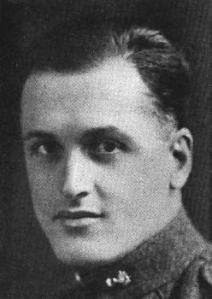
In 1908 he moved to New York City, where he was organist and music director at Grace Church Chapel and the Church of the Holy Communion (where William Muhlenberg had been rector) with a break to study in Paris (1911-1914) and another to serve in World War I with the Royal Canadian Artillery (his photograph here is from those years).

Not long after his return from Europe in 1920 he became the director of music at St. Bartholomew's Episcopal Church, where he would remain for the next twenty-six years and raise the level of music at that church to become one of the best-regarded in that city. His organ playing, both accompanying the choir and congregation, and in recital, was beloved by his peers, and he was also admired for the force of his personality. He also wrote several hymn tunes (most of them unison settings rather than in traditional four-part harmony - and also still under copyright), anthems and various service music items for Episcopal worship. He served on the committee that produced the Episcopal Hymnal 1940 (which includes six of his tunes).

However, Williams was also openly gay (whatever that would have meant in that time), and was suddenly dismissed from his position in 1946. This would certainly have been known for some time by leadership at St. Bartholomew's, and it's possible that action was not taken earlier because Williams was a close friend and colleague of composer Amy Beach, a parishioner and probably a significant donor to the church (who died in 1944). The congregation was told that  Williams had developed hearing problems and would be taking a leave of absence and leaving the city to seek treatment.

Following his forced retirement he remained in New York, in spite of the claims by church leadership, headed the organ department at the Juilliard School of Music and was a faculty member at the School of Sacred Music at Union Seminary. He remained active in church music circles and the local chapter of the American Guild of Organists, where younger people in later years couldn't recall any significant hearing issues.

This 2015 recording of Williams' anthem In the year that King Uzziah died is by the choir of Trinity Lutheran Church in Des Plaines, Illinois, directed by Brad Whaley.


Anthem text is from Isaiah 6:1-8.

Monday, January 23, 2017

Phillips Brooks

The Reverend Phillips Brooks, priest and briefly Bishop of Massachusetts, is remembered today in the Episcopal liturgical calendar on the day of his death in 1894. He was born in Boston on December 13, 1835, where he lived most of his life.  After graduating from Harvard in 1855 he maintained a lifelong connection to the university, often preaching at Appleton Chapel and acting as an overseer (though he turned down the invitation to serve as a professor of Christian ethics). He would take Harvard students to Europe when he travelled there, and students also served as pallbearers at his funeral.

In 1869 Brooks became the rector of Trinity Episcopal Church in Boston, and over the next several years a grand new church building was raised, designed by Henry Hobson Richardson and completed in 1877. It has been named as one of the Ten Buildings that Changed America in a PBS documentary. The novelist and historian Henry Adams, a second cousin of Brooks, wrote the novel Esther, about a young atheist who falls in love with Stephen Hazard, a clergyman involved in building a grand church. Hazard is assumed to be based on Brooks, and he and Esther become involved in an unfortunate relationship which ends when she refuses to marry him because marriage to an atheist would ruin his career. (Brooks himself never married either, though apparently there was no such affecting incident in his life).

Today, Brooks is most remembered as the author of O little town of Bethlehem, though in his own time it was his sermons which made him famous, published widely in periodicals and collected editions. His preaching reportedly brought thousands of people of all denominations to Trinity Church, and he is credited for inspiring the conversion of many, among them Helen Keller and the hymnwriter Eliza Scudder.

Several of Brooks' other hymns were written for special liturgical occasions, collected in Christmas Songs and Easter Carols (1910), though other verse by him has been included in hymnals over the years. Today's text was reportedly written on his last Sunday as rector of Trinity Church in 1891 before taking his seat as Bishop of Massachusetts. 

As once I listened came a word,
I knew not whence, I could not see;
But when my waiting spirit heard,
I cried, God, here am I, send me!

I turned, I went; along the way
That word was food and air and light;
I feasted on it all the day,
And rested on it all the night.

I wondered: but when soon I came
To where the word complete must be,
I called the wonder by its name:
for lo! the word I sought was thee.

Phillips Brooks, 1891; alt.
Tune: SOLOTHURN (L.M.)
Traditional Swiss melody;
arr. The English Hymnal, 1906

The statue of Phillips Brooks pictured above (you can click to see it larger), by sculptor Augustus Saint Gaudens, stands outside Trinity Church in Boston's Copley Square. A service of dedication for the memorial was held in February 1910, at which this hymn was sung. The statue is glowingly described in contemporaneous written accounts, many calling it a "characteristic" pose, "majestic," "heroic," and other such adjectives. Anecdotal accounts, however, suggest that not everyone agreed, and that many people present could not recall Brooks ever raising his hand like that while preaching, while others did not understand that the cowled figure behind him was supposed to be Jesus, and found it rather ominous and threatening.


Eight Years Ago: Phillips Brooks

Another Brooks Hymn: God will send the angels

Saturday, November 26, 2016

John Ireland Tucker

Born on this day in 1819, the Reverend John Ireland Tucker is no longer well-known. He has no listing at the Cyber Hymnal site and barely a biographical listing at Hymnary.org. However, in his time, he was one of the most inflential people in the Episcopal Church for his devotion to and encouragement of music in worship.

His maternal grandparents, Joshua and Ann Sands, were among the founders of the first Episcopal congregation in Brooklyn, NY, in 1787, which held its first services in their home. That church would eventually become St. Ann's (named for Mrs. Sands) and lives on today as St. Ann and the Holy Trinity in Brooklyn Heights.

Tucker was born in Brooklyn and named for a former rector of St. Ann's, John Ireland. One relative later claimed that the child could sing before he could talk. He was educated in schools in the New York metropolitan area; one of his teachers was William Muhlenberg at the Flushing Institute on Long Island, who would also have a place in American hymnic history. From a letter sent to young John by his mother we find a reference to chanting at Muhlenberg's school (not a widespread Episcopalian practice at the time), an interest which would reappear in later years. He also learned to play the organ as a student and was offered the opportunity to play a piece or two at services at St. Ann's during his school vacations.

Tucker graduated from Columbia College in 1837 and spent the next two years traveling abroad. Returning to New York, he served as a church organist,  reportedly being admonished at least once for "elaborate and showy" musicianship. He entered General Theological Seminary in 1841, graduated in 1844 and was ordained a deacon shortly after.

At the same time, in upstate Troy, New York, there was a girls' school associated with St. Paul's Episcopal Church, where the children were taught music and sometimes sang at services. The professional quartet choir objected to this and eventually threatened to quit if the girls were allowed to sing with them. The head of the school, Mary Warren (a daughter-in-law of the church's founders) solved the confict by endowing a new mission, the Church of the Holy Cross, where the girls' choir would sing every week. By the end of 1844 the new church had opened across town from St. Paul's, and Dr. Tucker was called as its first rector. The first choral service was held on Christmas Day, though the congregation had to go back to St. Paul's for the Eucharist as Tucker was still only a deacon.

In the choral services, rarely done at the time, many part of the liturgy were sung, including psalms, canticles and prayers. They sang psalms both to Gregorian chant tones and to composed Anglican chants. The choir usually performed one or two anthems, and the congregation joined them for the hymns.  The church was also one of the earliest Episcopal congregations to observe saints' days, and may have been the first to hold services on the Feast of the Ascension.

In 1848 Tucker was ordained to the priesthood, one day after the consecration of the Church of the Holy Cross. Choral services continued to be offered, and before long, Episcopal priests and musicians were traveling to Troy to experience them and to decide whether to start them in their own churches (many did). The Holy Cross choir also sang from time to time at other churches in the area on special occasions. Over the next several years, Tucker declined offers to pastor other congregations (he was even a nominee to become Bishop of Minnesota) and was to remain at Holy Cross until the end of his life.

Congregational singing at Tucker's church was considered equally as important as the choir's contributions. He took great interest in both the texts and tunes that were sung, and compiled his first collection, The Parish Hymnal, in 1870, for use in schools or confirmation classes. The texts in the Parish Hymnal were interlined with the music. Printed music in hymnals and the institution of musical education in public schools, both relatively new innovations at the time, allowed a greater variety of tunes to be used. Tucker chose tunes in several styles from both American and English composers.

At the time, the Episcopal church was still singing from their hymnal of 1826 (212 hymns, 150 psalm paraphrases), which was generally bound into the back of the Book of Common Prayer, and contained no music. When a new hymnal was finally approved in 1871 (only the texts were considered 'official'), the denomination licensed the book out to various musical editors, who chose their own tunes to be matched with the 520 texts contained therein. Tucker's edition, titled The Hymnal with Tunes Old and New, appeared the following year, and was taken up by many churches who thought they might emulate the hymn singing at Holy Cross. This musical edition of the 1871 hymnal is said to be the most popular of the four versions that were published.

Tucker compiled two hymnbooks for Sunday schools: The Children's Hymnal with Tunes (1874) and The New Children's Hymnal (1892). When the Episcopal church approved another new hymnal in 1892, he produced another musical edition (one of six this time) in 1894, The Hymnal Revised and Enlarged.

Across these hymnbooks, Tucker composed and published a handful of his own tunes, but most of them were not taken up by other editors, and none of his tunes are currently available to hear online.

John Ireland Tucker died on August 17, 1895, in the rectory which adjoins the Church of the Holy Cross. In December of the previous year the church and its rector had celebrated their fiftieth anniversaries with a joyful jubilee service. Sadly, the Church of the Holy Cross closed in December of 2009, before I was able to visit. It was purchased by a neighboring university but was not being used for anything the last time I saw it.

Most of the information here comes from a book by Christopher W. Knauff: Doctor Tucker, Priest-Musician (1897). The book is interesting for the wealth of information on his life and the history of his pastorate, his musical and liturgical contributions, and the Church of the Holy Cross itself. Many readers would probably be interested in the correspondence included from prominent hymn tune writers during the time Tucker was compiling his hymnals. 

Tucker's legacy lives on in the musical and liturgical life of the Episcopal church, though few people remember his name.


Seven Years Ago: William Cowper

Tuesday, April 29, 2014

Peter Hallock

Word is spreading that composer and church musician Peter Hallock died on Sunday at the age of 89.  Hallock was for 40 years (1951-1991) the music director at St. Mark's Cathedral in Seattle.  One of his most lasting contributions to St. Mark's (and to the wider Episcopal church) was his development and promotion of the weekly service of Compline on Sunday nights, which he began in the 1950s and continued to direct until 2003.  During the second half of the twentieth century, when evening worship was disappearing in many places, St. Mark's Compline service grew and grew and continues today, inspiring many other churches to offer this kind of service.

Hallock's choral music and his psalm settings are widely sung in different denominations. If you have 30 minutes to spare, you can listen to the St. Mark's Compline service from January 12 of this year, which includes his setting of Psalm 89 and his anthem The Baptism of Jesus (1980), which I've chosen because my own choir sings this anthem every year at our Advent Lessons and Carols service.  The text is from a medieval carol, in both Latin and English.

Jesus autem hodie regressus est a Jordane. (But today Jesus emerges from the Jordan.) 
When Jesus Christ baptized was, the Holy Ghost descended with grace;
the Father’s voice was heard in the place:
Hic est filius meus, ipsum intende. (This is my Son, listen to him.) 
There were Three Persons and one Lord, the Son baptized with one accord,
the Father said this blessed word:
Hic est filius meus, ipsum intende. (This is my Son, listen to him.) 
Now, Jesus, as thou art both God and man, and were baptized in from Jordan,
At our last end, we pray thee, say then:
Hic est filius meus, ipsum intende. (This is my Son, listen to him.)

I heartily recommend taking the time to listen -- it could be a pleasant way to end the day. (we also sing Compline every week at my church, though our service is somewhat simpler than Seattle's.). 
 We remember Peter Hallock today and give thanks for his ministry in music, which will surely continue through his many works.

Wednesday, August 14, 2013

Jonathan Myrick Daniels


Jonathan Myrick Daniels, a martyr for the civil rights movement in this country, is remembered today in the calendar of the Episcopal Church.  Daniels was a seminary student in 1965 when he heard a televised appeal by Dr. Martin Luther King Jr. for more clergy of all denominations to become involved in voter registration of African-Americans  in Southern states.  Daniels wrote that he was inspired by the words of the Magnificat, Mary's prophetic song of liberation from the Gospel of Luke, and became convinced that he was being called to engage in this work.

Daniels was working in Alabama when he and other protesters were arrested and jailed for six days.  On August 20, upon release, they were looking for transportation out of town when they were confronted by a man with a shotgun, who aimed at Ruby Sales, a sixteen year old girl.  Daniels pushed her aside and was shot in the chest himself, dying immediately. His killer was later acquitted at trial on the grounds of self-defense.

This murder of a young seminarian brought more attention to the civil rights struggle.  In 1991 Daniels was declared "a martyr and witness to the Gospel" by the Episcopal Church, to be commemorated on this day, the anniversary of his arrest (because August 20 was already marked for another saint). I have used this hymn before, several years ago, but it seems appropriate again on this day.

O pure reformers! not in vain
Your trust in humankind;
The good which bloodshed could not gain,
Your peaceful zeal shall find.

The truths you urge are borne abroad
By every wind and tide;
The voice of nature and of God
Speaks out upon your side.

The weapons which your hands have found
Are those which heav'n has wrought:
Light, truth, and love -- your battleground,
The free, broad field of thought.

Press on! and if we may not share
The glory of your fight,
We'll ask at least, in earnest prayer,
That God will bless the right.

John Greenleaf Whittier, 1843; alt.
Tune: MARTYRDOM (C.M.)
Hugh Wilson,1800; arr. Ralph E. Hudson, c.1885

A fellowship in his name has been established at the Episcopal Divinity School in Cambridge, Massachusetts, where Daniels was a student.  Next fall, the Episcopal diocese of Rhode Island plans to open the Jonathan Daniels House in Providence, where Daniels also engaged in ministry before traveling south.

Ruby Sales, the girl whose life was saved that day, has continued her involvement in the civil rights struggle up to the present day.


Four Years Ago: Samuel Sebastian Wesley 

Two Years Ago: Samuel Sebastian Wesley
 

Wednesday, January 2, 2013

Elizabeth Rundle Charles

English author Elizabeth Rundle Charles was born today in 1828, in the Devonshire village of Tavistock.  Though she wrote several popular books and collections of poetry in her day, her hymns are probably her longest surviving work, and a graph at hymnary.org indicates that her hymns are appearing in a growing number of hymnals today.

In addition to original texts, she also translated older texts from traditions outside her own Anglican background.  Today's seasonal hymn dates from the fifteenth century, Heu! quid jaces stabulo, written by Abbé Jean Mauburn as part of a longer work, Rosetum Ex­er­ci­ti­or­um Spir­it­u­al­i­um et Sa­cra­rum Me­di­ta­ti­on­um (1494).  The hymn is a dialogue between the worshipper and Jesus, discussing the paradox of the future Ruler coming to earth as a helpless child.

It's still the ninth day of Christmas...

Dost thou in a manger lie,
Who hast all created,
Stretching infant hands on high,
Savior, long awaited?
If a monarch, where thy state?
Where thy court on thee to wait?
Royal purple, where?
Here no regal pomp we see;
Naught but need and penury:
Why thus cradled here?

"For the world a love supreme
Brought me to this stable;
All creation to redeem,
I alone am able.
By this lowly birth of mine,
Pilgrim, riches shall be thine,
Matchless gifts and free;
Willingly this yoke I take,
And this sacrifice I make,
Heaping joys for thee."

Fervent praise would I to thee
Evermore be raising;
For thy wondrous love to me
Thee be ever praising.
Glory, glory be for ever
Unto that most bounteous Giver,
And that loving Lord!
Better witness to thy worth,
Purer praise than ours on earth,
Angels' songs afford.

Jean Mauburn, 1494
tr. Elizabeth Rundle Charles, 1868; alt.
Tune: MAUBURN (P.M.)
T. Tertius Noble, 1918

English composer and organist T. Tertius Noble emigrated to the United States in 1913. and was soon involved with the committee that selected the music for the Episcopal Hymnal of 1916, where this tune, written for this text, was first published. The hymn remains in the current Episcopal hymnal, but with a different tune.


Four Years Ago: Elizabeth Rundle Charles

Three Years Ago: The Ninth Day of Christmas

Two Years Ago: Elizabeth Rundle Charles

Monday, December 24, 2012

The Dawn of Redeeming Grace


Silent night, holy night,
All is calm, all is bright
Round yon virgin mother and Child.
Holy Infant, so tender and mild,
Sleep in heavenly peace,
Sleep in heavenly peace.

Silent night, holy night,
Shepherds quake at the sight;
Glories stream from heaven afar,
Heavenly hosts sing Alleluia!
Christ the Savior is born,
Christ the Savior is born!

Silent night, holy night,
Child of God, Love’s pure light;
Radiant beams from thy holy face
With the dawn of redeeming grace,
Jesus, Lord, at thy birth,
Jesus, Lord, at thy birth.

Josef Mohr, 1818; alt.
Tune: STILLE NACHT (Irregular)
Franz Gruber, 1818

Many people all over the world know the now-famous story of this popular Christmas hymn, written for the church of St. Nicholas in Oberndorf, Austria.  The church organ was broken that Christmas, and Fr. Mohr, the assistant priest, and Franz Gruber, the organist, collaborated on a new song that could be sung as a duet, with guitar accompaniment and a girls' chorus.

The first translation into English appears to have been by Emily Elizabeth Steele Elliott (Stilly night, holy night) for the choir of her church in Brighton in 1856 (though it was not published until years later), and was followed by several others, including these: 

Holy night! peaceful night! (1863) by Miss J.M. Campbell
Silent night! hallowed night (1865) Christian Hymnbook
Holy night! calmly bright (1867) by Mary D. Moultrie
Peaceful night, all things sleep (1872) Carols for St. Stephen's Church
Silent night, holiest night (1875) by Dr. A. Edersheim
Still the night, holy the night! (1881) by Stopford A. Brooke 

The current familiar translation, by an unknown writer, first appeared in an Episcopal Sunday School Hymnal (1871) edited by Charles Hutchins, the rector of Grace Church in Medford, Massachusetts.

I know that people continue to write new Christmas hymns for their churches' worship, but it 's unlikely that any of them will become as widely known as this one.


Two Years Ago: Jesus our Brother, strong and good

Sunday, December 16, 2012

In Mercy Save Thine Israel

For the third Sunday in Advent we take a look back to last week's familiar hymn and find a much lesser known text based on the same material.  The O Antiphons of the eighth century have been set to music in varying ways over the years, but the one we know best, of course,  is O come, O come Emmanuel.

Today's text is also based on the O Antiphons, adapted from the prose version that had appeared in John Mason Neale's Hymnal Noted (1854).  Primary translator Horatio Bolton (Earl Nelson), grand-nephew of the renowned British admiral Lord Nelson, included this hymn in the Sarum Hymnal (1868) which was largely compiled by him.


O Wisdom, spreading mightily,
From out the mouth of God most high,
All nature sweetly ordering,
Within thy paths thy people bring:

Refrain
Draw near, O Christ, with us to dwell,
In mercy save thine Israel.

Ruler of Israel, God of might!
Who gav'st the law from Sinai's height;
Once in the burning bush revealed.
With outstretched arm thy people shield:
Refrain

O Root of Jesse! Ensign thou!
To whom the nations' kings shall bow,
From ev'ry foe thy people save,
And give them victory o'er the grave:
Refrain

O Israel's Sceptre! David's Key!
Come thou and set all people free;
Unlock the gate that bars the road
And lead them to the house of God:
Refrain

O Dayspring and Eternal Light!
Pierce through the gloom of sorrow's might;
The promised Sun of Righteousness,
Haste with thy rising beams to bless:
Refrain

O dear Desire of nations! come,
Lead us from earth to heav'n's high home;
Thou chief and precious Cornerstone,
Binding the scattered into one:
Refrain

O Comforter! Emmanuel! King!
Thy praises we would ever sing;
The nations' hope, the Savior blest,
Take us to thine eternal rest:
Refrain

Latin; tr. Horatio Bolton and others, 1868; alt.
Tune: MELITA (8.8.8.8.8.8.)
John Bacchus Dykes, 1861

This hymn was included in the 1871 hymnal of the Episcopal Church (which is where I found it), on the page opposite O come, O come Emmanuel, with similar instructions for singing one stanza each day between December 17 and 23.  It has not appeared in any later Episcopal hymnals, presumably because it was considered redundant.  No, it will never supplant the hymn we all know, but I thought it worth a look.


Four Years Ago: John Ellerton

Three Years Ago: John Ellerton

Saturday, October 8, 2011

Walter Russell Bowie

Walter Russell Bowie was born today in 1882 in Richmond, Virginia.  He was educated at Harvard University (where he co-edited the Harvard Crimson newspaper with Franklin Delano Roosevelt) and the Virginia Theological Seminary.  In 1909 he was ordained in the Episcopal Church.

Following two years at Emmanuel Episcopal Church in Greenwood, VA, he became the rector of St. Paul's Episcopal Church in Richmond, where he had been baptized in 1883.  During World War I he took a leave of absence from that church to serve as a Red Cross hospital chaplain in France, then returned to Richmond until 1923, when he went to Grace Church in New York City.  After sixteen years at Grace he served as Professor of Practical Theology and later Dean of Students at Union Theological Seminary.

Bowie was a renowned preacher who is still referenced in most histories of preaching.  A series of his sermons from 1935 at the Lyman Beecher Lectures at Yale University was published as The Renewing Gospel, only one in a long series of books he published in his lifetime.  He was also on the editorial committee for the Revised Standard Version of the Bible.

He was a strong proponent of the social gospel, which applies Christian ethics to the problems of the world. The first of his hymn texts to receive wide publication is still one of the great social gospel hymns of the twentieth centtury: O holy city, seen of John, which was written at the request of Henry Sloan Coffin for inclusion in Hymns of the Kingdom of God (1910). Coffin and his co-editor, Ambrose White Vernon, were looking for texts that would demonstrate that signs of the reign of God could be brought forth here on earth, and were not just something to be hoped for in the life to come.

Bowie naturally supported many other social causes and was active in promoting them. In the 1920s he joined the American Committee for Protection of Foreign Born, which opposed the racist immugration laws that were being passed at that time. This was not a new cause for him, as this hymn from 1913 shows.  Since immigration is still a prominent topic in our national discussion it seems appropriate for today.

God of the nations, who from dawn of days,
Hast led thy people in their widening ways, 
Through whose deep purpose seeking thousands stand
Here in the borders of our promised land.

Thine ancient might rebuked the Pharaoh’s boast.
Thou wast the shield for Israel’s marching host,
And, all the ages through, past crumbling throne
And broken fetter, thou hast brought thine own.

Thy hand has led across the hungry sea
The eager peoples flocking to be free,
And, from the lands of earth, thy silent sway
Fashions the nation of the broadening day. 

Then, for thy grace to grow in unity, 
For hearts aflame to serve thus cause for thee, 
For faith, and will to win what faith shall see, 
God of thy people, hear our cry to thee. 

Walter Russell Bowie, 1913; alt. 
Tune: SUMMERFORD (10.10.10.10.) 
John T. Grimley, 1887 

Bowie would have been familiar with The New Colossus, the famous poem by Emma Lazarus that was written for the Statue of Liberty; this hymn follows a similar theme.

There is not a great number of hymn texts by Walter Russell Bowie, but they surely still .do merit our consideration.  I also like this prayer he wrote for a united world made stronger by the gifts of God.


O God, out of all the world you let us find one another and learn together the meaning of love.  Let us never fail to hold love precious.  Let the flame of it never waver or grow dim, but burn in our hearts as an unwavering devotion and shine through our eyes in gentleness and understanding. Teach us to remember the little courtesies, to be swift to speak the grateful and happy word, to believe rejoicingly in each other’s best, and to face all life bravely because we face it with united heart….Through Jesus Christ our Lord.  Amen

Wednesday, September 15, 2010

Horatio W. Parker

Composer Horatio William Parker, born today in Auburndale, Massachusetts in 1863, is pictured here in his Yale academic robes (he was the first Dean of the Yale School of Music from 1904 to 1919).

In The History of American Music (1915), author Lewis Charles Elson recounts some recollections of Horatio's mother, Isabella, who was a church organist. According to her, the child Horatio showed no interest in music. His interest developed rather suddenly when he was fourteen (she pinpointed it to October, 1877), when he began "to ask all sorts of questions about it, and to spend literally whole days at the piano, beginning at daylight, and stopping only when his father sent him to bed." She began to teach him piano and organ, and within two years he was the organist at St. Paul's Church in Dedham, Massachusetts.

He also started to compose during these years; among his first works was a set of fifty songs with texts by childrens' writer and illustrator Kate Greenaway, described as having "good melody and sufficient accoampaniment."

Of course, as recounted here on his previous birthdays, he went on to become one of the most prominent composers of his day, particularly renowned for his contributions to church music with his oratorios, anthems, service music, and hymn tunes. Since we've already some of his tunes, today I'm directing you to one of his anthems. Perhaps his most lasting one is the Easter anthem Light's glittering morn, sung here at St. Peter's Catholic Church in Columbia, SC during a regional convocation of the American Guild of Organists (text is below). Listen for when the familiar hymn tune VICTORY comes in from the choir, over the soloist - it's my favorite moment in this favorite piece.


Light's glittering morn bedecks the sky;
heaven thunders forth its victor cry;
the glad earth shouts her triumph high,
and groaning hell makes wild reply.

While he, the King, the mighty King,
despoiling death of all its sting,
and, trampling down the powers of night,
brings forth his ransomed saints to light.

[solo]
That Eastertide with joy was bright,
the sun shone out with fairer light,
when, to their longing eyes restored,
the glad apostles saw their Lord.

He bade them see his hands, his side,
where yet the glorious wounds abide;
the tokens true which made it plain
their Lord indeed was risen again.

[quartet]
O Jesus, King of gentleness,
do thou thyself our hearts possess
that we may give thee all our days
the tribute of our grateful praise.

[solo]
O Lord of all, with us abide,
in this our joyful Eastertide;
from every weapon death can wield
Thine own redeemed forever shield.

[Congregation joins:]
The strife is o'er, the battle done,
The victory of life is won,
The song of triumph has begun.

Alleluia, alleluia! (et repetitur)

All praise be thine, O risen Lord,
from death to endless life restored.
All praise to God the Father be,
and Holy Ghost, eternally.
Alleluia, Amen!

Text:
Aurora lucis rutilat, formerly attributed to Ambrose of Milan;
tr John Mason Neale, 1851


Two Years Ago: Horatio W. Parker

One Year Ago: Horatio W. Parker


Tuesday, August 24, 2010

Saint Bartholomew

For thy dear saints, O Lord,
Who strove in thee to live,
Who followed thee, obeyed, adored,
Our grateful hymn receive.

They all in life and death,
With thee, O Christ, in view,
Learned from thy Holy Spirit’s breath
Thy healing work to do.

Thine earthly members fit
To join thy saints above,
In one communion ever knit,
One in the bond of love.

Jesus, thy Name we bless,
And humbly pray that we
May follow them in holiness,
Who lived and died for thee.


Richard Mant, 1837; alt.
Tune: ST. HELENA (S.M.)
Benjamin Milgrove, 1769

These "lesser"saints rarely have multiple hymns for their feast days, and for the most part, the useful ones have already been seen here (though I'm always looking). There are a great number of St. Bartholomew's Churches out there, but I'd imagine that many of them would be more likely to sing a general saints' day hymn like this one on their patronal feast.

The hymn presented here two years ago (see link below) is a good one, I think, but clearly not everyone agrees. Though technically it remains in the Episcopal Hymnal 1982 it has been cut to half its original length, turning a hymn of four eight-line stanzas to one of four four-line stanzas, but maybe somewhere some church actually sings the whole thing. That's the nice thing about the internet - more resources are avaiilable than ever before and no one is really limited to the hymnal they happen to own.


Two Years Ago: Saint Bartholomew

Tuesday, August 17, 2010

George William Warren

Composer and church musician George William Warren was born on this day in 1828, in Albany, NY. His family was descended from early American settler Richard Warren, one of the signers of the Mayflower Compact in 1620.

Though Warren reportedly showed some musical talent as a child, he did not study music in school. As a young adult, he spent several years in business only then teaching himself music in his spare time. He began to play the organ at St. Peter's Episcopal Church in Albany and eventually became the regular organist there, giving up business for a career in music. While still in Albany he began coaching a soprano named Isabella Hinkley who went on to an important career on the opera stage in the mid-nineteenth century.

Warren moved to New York City in 1860 where he became the organist and music director at the Church of the Holy Trinity in Brooklyn. He was also the Brooklyn correspondent for Dwight's Journal of Music, where he wrote under the pseudonym of "Jem Baggs." He had became friends with the composer Louis Moreau Gottschalk and the two worked together on some compositions, also appearing in concert together in pieces for two pianos (one of these was Warren's The Andes which is available for download).

After ten years in Brooklyn he was named organist at
St. Thomas' Episcopal Church on Fifth Avenue in Manhattan. His first Sunday there in 1870 was also the first service held in a new building for the congregation (the third of four they have had up to the present). Most of Warren's church music, including anthems, service music, and hymn tunes was written during the next twenty years at St. Thomas', and he became one of the best-known Episcopal musicians of his time. In 1888 he compiled many of his tunes into a book published by Harper Brothers: Hymns and Tunes as Sung at St. Thomas's Church, New York.

His one tune that we would recognize today (which we have already heard here) was written later, in 1892, for a commemoration of the centennial of the United States Constitution, and to be paired with a text that had been written for the centennial of the Declaration of Independence in 1876. NATIONAL HYMN is still sung in many churches on Independence Day and other national occasions.

But there were those other tunes as well, many of them for texts that we would recognize, though we sing them to different tunes today, for one reason or another. We all know today's hymn, but I suspect that it is so familiar because it has been paired with a great tune. However, that tune had not yet been written in Warren's day, and he wrote this one, which we might still know today if CWM RHONDDA had not been written 23 years later.

Guide me, O thou great Redeemer,
Pilgrim through this barren land.
I am weak, but thou art mighty;
Hold me with thy powerful hand.
Bread of heaven
Feed me till I want no more.

Open now the crystal fountain,
Whence the healing stream doth flow;
Let the fire and cloudy pillar
Lead me all my journey through.
Strong Deliverer
Be thou still my Strength and Shield.

When I tread the verge of Jordan,
Bid my anxious fears subside;
Death of deaths, and hell’s destruction,
Land me safe on Canaan’s side.
Songs of praises
I will ever give to thee.

William Williams, 1745
tr. Peter Williams, 1771; alt.
Tune:
GUIDE ME (8.7.8.7.4.7.)
George W. Warren, 1884


Now, it's also possible that with Warren's tune, which I think is not at all bad, but lacks that certain something that CWM RHONDDA has, this text might not be particularly well-known today.

In 1890 Warren added the organist position at Columbia University to his duties at St. Thomas, and he also lectured on music there despite having no degree in music except an honorary doctorate awarded by Racine College in Wisconsin. The Episcopal Diocese of New York honored him with a special service to mark his twenty-fifth year at the church, which was reported in the New York Times on November 4, 1895.

His obituary in the Columbia University Quarterly began: On Sunday morning, March 16, 1902, the soul of George William Warren separated from the body by the process called death. It continued:

Years before there was in this country any intelligent appreciation of church music, or adequate facilities for the scientific study of any kind of music, George William Warren became the apostle of a movement which largely through his efforts and influence has come now to be recognized as an integral part of the instruction of a university. (...) Those who laid foundations are not to be ignored when the roll of those who are great is called in any field of work.

You might think that Warren has been largely ignored by many in the century since his death, but NATIONAL HYMN, at least, will still be sung for years to come. There is also a current exhibit on his life and work at the Albany Institute of History and Art (from which I got the photograph of Warren above) which is running through the end of this month.