Sunday, September 13, 2009

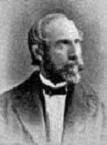
Catherine Winkworth

Hymn translator Catherine Winkworth was born today in 1827 in London, and moved to Manchester at a young age, where she spent much of the rest of her life. Her interest in translating German hymns of the seventeenth and eighteenth centuries was perhaps sparked by the gift of a book (with the generic title Andachtsbuch, or "devotional book") containing some of these hymns, which she received from Christian Karl Bunsen, a family friend who also happened to be the British ambassador to Germany.

Catherine, assisted by her sister Susanna, published two volumes of hymn translations from German titled Lyra Germanica. The first, in 1855, contained 103 hymns, and the second, in 1858, contained 131. These books contained only the texts. In 1863, with the assistance of musical editors
William Sterndale Bennett and Otto Goldschmidt, Catherine published The Chorale Book for England, which paired many of her translations to their original German tunes.

Several of her translations have already appeared here (click on her name in the tags below). This familiar hymn is adapted from one of her best known translations from a hymn by Joachim Neander, published in the Chorale Book with its original German tune arranged by Sterndale Bennett. She retained the original meter which is quite unusual for a hymn in English: two very long lines (14 syllables!) followed by a very short line of four syllables and then finished with two lines relatively normal in length. I don't think there is another tune that would fit it.

Praise be to God, the Almighty, who rules all creation!
O my soul, worship the wellspring of health and salvation!
Join the great throng,

Psaltery, organ, and song;
Sound forth your glad adoration.

Praise be to God, who o'er all things is wondrously reigning,
And as on wings of an eagle, uplifting, sustaining!
Have you not seen

All that is needful has been
Sent by God's gracious ordaining?

Praise be to God, who will prosper your work and defend you;
Surely God's goodness and mercy here daily attend you;
Ponder anew

What the Almighty can do,
Who with great love shall befriend you.

Praise be to God, O forget not God's manifold graces!
Each that has life and breath, one song of gratitude raises;
Let the Amen

Sound from God's people again,
Singing forever God's praises.

Joachim Neander, 1680
tr. Catherine Winkworth, 1863; alt.
Tune: LOBE DEN HERREN (14.14.4.7.8.)
Ander Theil des Erneuerten Gesangbuch, 1665

harm. William Sterndale Bennett, 1864

Winkworth's four-stanza translation (fairly free to begin with, according to contemporaneous sources) has been altered in several different ways by several generations of hymnal editors, but the sense is the same. In the English Hymnal (1906) there were three additional stanzas added which were not from the German original, and perhaps written by Percy Dearmer. This is the best of them, I think (though I probably wouldn't add it in myself):

Praise be to God, who, when tempests their warfare are waging,
Who, when the elements madly around you are raging,
Bids them to cease,
Turning their fury to peace,
Whirlwinds and waters assuaging.


One Year Ago: Catherine Winkworth

Friday, September 11, 2009

Harry Thacker Burleigh

Earlier this summer, the General Conference of the Episcopal Church added several persons to be commemorated on the church calendar, including some additional musicians and hymnwriters, which puts them on our calendar here.

Composer Henry "Harry" Thacker Burleigh is marked today, one day before the anniversary of his death (though some sources erroneously show his death as December 12). Burleigh was born and raised in Erie, Pennsylvania, where he sang in a quartet with his brother and two sisters as a young teen, then in high school he joined the newly established Choir of Men and Boys at the Episcopal Cathedral of St. Paul in Erie. Over the next few years, Burleigh performed as a baritone soloist in several area churches and synagogues, as well as for community organizations.

In 1892 he moved to New York City, having won a scholarship to the National Conservatory of Music, and his first chance to receive formal musical training. He became friendly with the school's director, the composer Antonin Dvorak, and became Dvorak's assistant in 1893, copying out the instrumental parts from the manuscript of the New World Symphony. Some sources credit Burleigh's friendship with Dvorak with the elder composer's use of themes in that symphony which evoke African-American spirituals, though Dvorak apparently never confirmed that assumption.

In 1894, Harry Burleigh became the baritone soloist at St. George's Episcopal Church in New York over the objections of many in the congregation who were not comfortable with an African-American song leader. However, he was to remain in that post for the next fifty-two years, reportedly missing only one Sunday. In 1900 he also became the first black soloist at the NYC synagogue Temple Emanu-El. During these years he also began to compose, but his compositions took second place to his concert career for the next several years.

In 1911 he began working as an editor in the New York office of G. Ricordi and Company, an Italian music publisher. He took more of an interest in composing after this, and also in exploring the tradition of the spiritual. He compiled, arranged, and published Jubilee Songs of the United States (1916) and Old Songs Hymnal (1929) which collected more than a hundred spirituals that had not been published before. His arrangements of spirituals, both for soloists and for chorus are still sung today, such as this one.


Burleigh also composed instrumental music, and was renowned for his art songs. He was a charter member of the American Society of Composers, Authors and Publishers (ASCAP) and later served on its board of directors.

In the Episcopal Hymnal 1940, his hymn tune McKEE was first published with the John Oxenham text In Christ there is no east or west. McKEE was based on the spiritual I know the angel's done changed my name, and named for the Reverend Elmore McKee, the then-current rector of St. George's. You may have sung it; it was published in several hymnals after that.

Harry Burleigh retired as St. George's baritone soloist in 1946 at the age of eighty, two years before his death. A posthumous tribute in the church's newsletter declared He seemed aware of deeper tones of brotherhood and throbbing harmonies of humanity which others did not hear.

Thursday, September 10, 2009

Henry Purcell

Today is the 350th birthday of composer Henry Purcell. He was born in London, not far from Westminster Abbey, where he would be organist for many years and where he was eventually buried. His father was a well-known singer and his younger brother Daniel was also a composer (who completed the music for the “semi-opera” The Indian Queen after Henry's death).

Purcell's musical teachers included composers Pelham Humfrey and John Blow, though his talent and fame would eventually outstrip theirs. His composing career was somewhat bookended by associations with people in the “hymn business” (technically, in Purcell's time, it was really still the “psalm business”). Some of his earlier secular compositions appeared in books published by John Playford, whose most relevant book here is probably The Whole Book of Psalmes (1661), which contained some psalm tunes that were sung for a few hundred years thereafter. Toward the end of his life, Purcell's short opera Dido and Aeneas (1689) was written to a libretto by Nahum Tate, who with Nicholas Brady wrote A New Version of the Psalms of David (1696), the psalter that became the most widely used in English-speaking countries; some of the Tate and Brady psalms are still sung today.

While Purcell did not write four-part hymn tunes as we know them, some of his music was later arranged to be used with hymn texts, such as (perhaps) this one.

In the beginning was the Word:
Amid chaotic night
It gleamed with quick creative pow'r
And there was life and light!

Thy Word, O God, is living yet,
Amid earth's restless strife
New harmony creating still,
And ever higher life.

O Word that broke the stillness first,
Sound on! and never cease,
Till all earth's shadows be made light
And all its discord peace!

Till, wail of woe and clank of chain
And heat of battle stilled,
The world with thy great music's pulse,
O Word of Love! be thrilled.

Till selfish passion, strife, and wrong
Thy summons shall have heard,
And thy creation be complete,
O thou Eternal Word!

Samuel Longfellow, 1864; alt.
Tune:
WALSALL (C.M.)
from Henry Purcell, 17th cent. (?)


This tune was first published in 1721 in the elaborately-titled A Choice Collection of Psalm Tunes, Hymns and Anthems, For the Delight and Improvement of All who are Truly Lovers of Divine Musick. The book was compiled by William Anchors, who neglected to identify the composers of any of the pieces. Some later sources then attributed the tune to Purcell, while others continued to identify the tune as “anonymous.” Since it is associated with Henry Purcell in many places, I'll claim it for today.

One Year Ago: Henry Purcell

Sunday, September 6, 2009

The Many Names of God

God's many names as expressed in the hymns we sing is one of the ongoing themes here, though I've never made this too explicit. The poetic expressions of hymnwriters through the ages use many different names for God, some found in scripture, some not.

We know the familiar names: Father, Creator, Maker, Son, Redeemer, Holy Spirit, Holy Ghost, Comforter. Love is a name given to God in many hymns. Modern hymnwriting is especially fond of “new”
names for God, but I hope we've seen here that “modern” ideas are often not as modern as we think. Some of the hymns we've seen here already have named God in these other ways:

Wisdom

Shield and Defender

Protecting Power

Breath of Life

Sower

Eternal Loveliness

Grace Divine


and the sometimes controversial (elsewhere, but never here)
Mother

Here's another one, by the Unitarian
Seth Curtis Beach, primarily known for his book Daughters of the Puritans (1905) a collection of biographical essays on women writers of New England.

Mysterious Presence, Source of all --
The world without, the soul within,
O Fount of life, hear thou our call,
And pour thy living waters in!

Thou breathest in the rushing wind;
Thy Spirit stirs in leaf and flower;
Nor wilt thou from the willing mind
Withhold thy light and love and power.

Thy hand unseen to accents clear
Awoke the psalmist’s trembling lyre,
And touched the lip of holy seer
With flame from thine own altar fire.

That touch divine, O God, impart;
Still give the prophet’s burning word;
And, vocal in each waiting heart,
Let living psalms of praise be heard.

Seth Curtis Beach, 1866; alt.
Tune:
WAREHAM (L.M.)
William Knapp, 1738

Mysterious Presence may not be considered sufficiently orthodox a name for some, but this hymn has not been confined solely to Unitarian Universalist hymnals (the list at that link is actually incomplete; the rest of them are here). We will revisit this theme again, perhaps with more emphasis, but if you think about it, you can probably come up with a few uncommon names from hymns you already know. Please feel free to mention them in the comments section!

Saturday, September 5, 2009

Amy Beach

Composer Amy Marcy Cheney Beach was born today in 1867 in New Hampshire. Her musical talent was apparent from an early age; reportedly she sang improvised harmony to her mother's melody line at the age of two, began composing (in some fashion or other) at four, and played her first piano recital at seven.

She composed in many different forms, symphony, opera, chamber music, choral music and songs, and of course a few hymn tunes. Many of her works have been recorded, though there are many more still to be heard by modern audiences.

Last year there were no performances of her choral work available for you to hear on YouTube, but one has finally turned up, her anthem Let this mind be in you (the text taken from Philippians 2:5-11, if you want to follow along). Thanks to the Gallery Choir of St. Peter's Catholic Church, Columbia, SC.


In 1921, Beach first went to stay for a period at the MacDowell Colony in her native New Hampshire, and she returned for many summer stays after that, eventually serving on the board of directors. Even during her final years, when her health rarely allowed her to leave New York, she made an effort to attend the official annual meetings. After her death in 1944, her will granted the ongoing proceeds from royalties on her copyrighted works to the colony.


One Year Ago: Amy Beach

Wednesday, September 2, 2009

Queen Liliuokalani

Today is the 171st birthday of Queen Liliuokalani, the last royal ruler of Hawaii. She composed more than 165 songs and chants, several during her imprisonment in the Iolani Palace following the overthrow of her government by US interests acting without federal authorization.

In 1898 she published Hawaii's Story by Hawaii's Queen, which was a combined history and autobiography. Regarding her music, she wrote:

To compose was as natural to me as to breathe; and this gift of nature, never having been suffered to fall into disuse, remains a source of the greatest consolation...

Her most famous song was Aloha Oe (Farewell to Thee), a song about two lovers parting. The melody of this song (which you can hear online) was later adapted into at least three gospel songs:

Go and Tell (1916)
(arrangement by Clarence Kohlman, words by C. Austin Miles)

He's Coming Soon (1918)
(words and arrangement by Thoro Harris)

He Lives on High (1921)
(words and arrangement by B.B. McKinney)

Liliuokalani's melody is also said to bear a resemblance to two songs by Charles Crozat Converse (Rock Beside the Water) and George Root (There's Music in the Air).

In 1896 she was baptized and confirmed into the Episcopal Church, leaving her native church which she felt had not been supportive during her trial and imprisonment. She also supported other religions, attending a celebration of Buddhists and Shintos in 1901 that helped to bring acceptance of those faiths in Hawaii. The deposed Queen Liliuokalani died on November 11, 1917 following a stroke. In 1997, the Liliuokalani Trust finally published a collection of her musical compositions titled The Queen's Songbook.

There is one surviving member of the Hawaiian royalty, Princess Abigail, and she remains devoted to the legacy of her forebears.


One Year Ago: Queen Liliuokalani

Sunday, August 30, 2009

George Frederick Root

George Frederick Root (August 30, 1820 - August 6, 1895) was named for the composer Handel, so his parents must have had some interest in music, perhaps even an interest in the musical education of their son. He left home at 18 with the intention of a career in music which was certainly fulfilled. While he later was primarily known as a successful composer, his earlier years also were spent in teaching music and a few church organist positions. With William B. Bradbury he opened a music school in New York City in 1853 that operated until it was destroyed in an 1871 fire.

Root's early songs were mostly secular in nature, and his patriotic songs during the Civil War were especially popular. Though later he certainly wrote plenty of
hymn tunes and gospel songs (sometimes words as well as music), some of his secular tunes had new sacred texts written to them. Last year hymn blogger Leland reminded us of Jesus loves the little children, whose tune was originally the Civil War song Tramp! Tramp! Tramp! The tune of another Root song, The Little Octoroon, was later used for Ring the bells of heaven.

This is another of Root's gospel songs that I like, though I don't believe it lasted much longer than his lifetime, like many of the others he wrote.


Thou art my Rock in the wide desert land,
Sheltered by thee here in safety I stand;
What though the storms and the tempests may beat,
What though the sun pour its fierce noontide heat:

Refrain
Sheltered by thee, sheltered by thee,
Here in the shadow from danger I’m free.


Once I was wand’ring exposed to the storm,
Refuge there was none to shield me from harm;
One day I found, in the broad desert way,
Christ as my Rock, and with gladness could say:
Refrain

Come to the Rock so majestic and grand;
Here in its shelter a million may stand;
Now we may feel that our hope here is sure,
Here we may say in our safety secure:
Refrain

George F. Root, 1885; alt.
Tune:
ROCK OF SHELTER (10.10.10.10. with refrain)

In his later years, George Root was looked upon as one of the elder statesmen of the gospel song, mentioned with affection in the writings of his younger comrades in the field, though many of their songs would far outlive his.

One Year Ago: George Frederick Root

Friday, August 28, 2009

Ira David Sankey

Today is the birthday of Ira David Sankey (August 27, 1840 - August 13, 1908), known in his time as the "sweet singer of Methodism" to millions around the world. He grew up in rural Pennsylvania, developing his musical talents from an early age. He became active in the Methodist Episcopal Church as a Sunday School leader and choir director. He enlisted in the army just before the Civil War, and organized a choir in his Maryland regiment, also helping the chaplain in services by leading the songs.

Following the war, he joined his father in the
Internal Revenue Department, but also volunteered with the YMCA and continued to gain popularity as a song leader thoroughout Pennsylvania and Ohio. It was during the international YMCA conference in Indianapolis in 1870 that he met the evangelist Dwight L. Moody, when he spontaneously led a hymn (There is a fountain filled with blood) during a Baptist service conducted by Moody.

The following day, Moody arranged for them to meet on a street corner, where he asked Sankey to sing Am I a soldier of the cross. A crowd soon gathered, and Moody began to preach, then announced that the service would be continued at the nearby Opera House. The assembly followed the two men down the street, singing Shall we gather at the river. Moody had already recognized Sankey's potential and insisted that he join the crusade.

Sankey eventually agreed, and the two men worked together for more than twenty-five years, bringing their traveling crusade all over the US, to Canada, Mexico, England and Scotland. In their time, they were as well known and popular as Billy Graham would be in the twentieth century, and they did it without the mass media of radio and television.

Sankey began to write his own tunes for the songs Moody wanted to use in their services, and all the gospel songwriters of the day wanted to work with him. Any song used in the Moody-Sankey services would immediately become known to thousands of people. Gospel songs became popularly known as "Sankey songs," even ones he hadn't written. Sankey compiled several collections of hymns and songs which were huge best sellers and the income from these books went to several charitable ventures supported by Moody and Sankey.

Ira Sankey wrote dozens of tunes, many of which survived into the twentieth century and some even to the present. Perhaps the most popular was
The Ninety and Nine, which was reportedly improvised on the spot during a service in 1874, where he hoped he could remember what he had played before as he went through the verses. You can hear Sankey himself singing this song at this page.

Later in life, Sankey was the president of the Biglow & Main Company, perhaps the most prominent publisher of gospel songs, where he continued to work with gospel songwriters, This song from that period, its theme taken from Psalm 17:6 (Hide me under the shadow of thy wings), is still sung and remembered by many.

Under your wings I am safely abiding,
Though the night deepens and tempests are wild,
Still I can trust you; I know you will keep me,
You have redeemed me, and I am your child.

Refrain
Under your wings, under your wings,
Who from your love can sever?
Under your wings my soul shall abide,
Safely abide forever.

Under your wings, what a refuge in sorrow!
How the heart yearningly turns to its rest!
Often when earth has no balm for my healing,
There I find comfort, and there I am blessed.
Refrain

Under your wings, oh, what precious enjoyment!
There will I hide till life’s trials are o’er;
Sheltered, protected, no evil can harm me,
Resting in Jesus, I’m safe evermore.
Refrain

William O. Cushing, 1896; alt.
Tune:
UNDER HIS WINGS (11.10.11.10. with refrain)
Ira D. Sankey, 1896


Sankey's autobiography appeared in 1906, having been dictated from memory when the original manuscript was lost in a 1901 fire. During the last five years his life, Sankey was blind. He lived in Brooklyn at the time, and he and his old friend Fanny Crosby would sit together, singing and praying.

One of Sankey's sons, Ira Allan Sankey, also wrote tunes for gospel songs and succeeded his father at Biglow & Main. Sankey's songbooks remained in print for many years after his death in 1908.


Thursday, August 27, 2009

Thomas Gallaudet

Today the Episcopal Church calendar marks the death of the Reverend Dr. Thomas Gallaudet (June 3, 1822 - August 27, 1902). He was the son of Thomas Hopkins Gallaudet, who founded the first school for the deaf in the US.

After graduating from
Trinity College in Hartford, CT, the younger Gallaudet taught at his father's institute for a time before turning to the Episcopal priesthood. In September, 1850, as a deacon, he started a Bible study class for the deaf at St. Stephen's Church in New York City.

Gallaudet was ordained as a priest in 1851. He believed that the formal liturgy of the Episcopalians, which closely follows the Book of Common Prayer, could be easily followed by deaf persons through sign language, and that sign language could be taught to other priests. He started St. Ann's Church, which held its first services on the first Sunday in October in 1852. Both deaf and hearing parishioners worshipped together, and over time the church was known for welcoming all people regardless of race or disability. One of the church's members,
Henry Winter Syle, with Gallaudet's encouragement and support became the first deaf person ordained in the Episcopal Church (Syle is also commemorated today).

Gallaudet continued to expand his ministry by traveling to various other churches throughout the country where he taught sign language to priests and established deaf ministries in several other locations. He also founded a home for aged deaf people in Poughkeepsie, NY which continues today as a charitable fund, long after the building was closed.

According to the CyberHymnal, this hymn was written by Thomas Gallaudet, (though some sources attribute it to his father).

Jesus, in sickness and in pain,
Be near to succor me,
My sinking spirit still sustain;
To thee I turn, to thee.

When cares and sorrows thicken round,
And nothing bright I see,
In thee alone can help be found;
To thee I turn, to thee.

Should strong temptations fierce assail,
As if to ruin me,
Then in thy strength will I prevail,
While still I turn to thee.

Through all my pilgrimage below,
Whate’er my lot may be,
In joy or sadness, wealth or woe,
Jesus, I’ll turn to thee.

Thomas Gallaudet, 1845
Tune:
JAZER (C.M.)
William B. Bradbury, 1844


This tune by William Bradbury was named for a Biblical city near the Jordan River. The first line probably sounds familiar, but it was written many years before MUELLER, a popular tune for Away in a manger.

One Year Ago: God's All-Inclusive Love

Tuesday, August 25, 2009

Fightings Without and Fears Within

On this past weekend the annual Methodist hymn festival and choir competition in Fiji was to have taken place. Last month the gathering was cancelled by the military government of Fiji, but regional choral events were planned. During the last week, I had read that permission was then denied for those regional gatherings as well, but I wanted to wait to see what would happen, as there was speculation that the people would gather to sing in defiance of the ban.

A report has finally surfaced at Christianity Today. It appears that the government was successful in suppressing the choir gatherings. Several Methodist churches were "unavailable for comment." Reports of a new state-sponsored Methodist denomination in Fiji which will obviously be tightly controlled are troubling.

This Methodist hymn by Charles Wesley foresees the day when the Fiji Methodists are free to gather again in conference or in song. We should pray that that day will not be long in coming.

And are we yet alive,
And see each other’s face?
Glory and thanks to Jesus give
For great redeeming grace!

Preserved by power divine
To full salvation here,
Again in Jesus’ praise we join
In Jesus' sight appear.

What troubles have we seen,
What mighty conflicts past,
Fightings without, and fears within,
Since we assembled last!

Yet out of all our God
Hath brought us by great love;
And all along our paths hath trod,
To guard our life above.

Then let us make our boast
Of God's redeeming power,
Which saves us to the uttermost,
Till we can sin no more.

Let us take up the cross
Till we the crown obtain,
And gladly reckon all things loss
So we may Jesus gain.

Charles Wesley, 1749: alt.
Tune:
DENNIS (S.M.)
Hans Nageli, 19th cent.
arr. Lowell Mason, 1845


It's unfortunate that Methodist churches worldwide couldn't have made this situation more widely known. Imagine if congregations all over the world had held their own hymn sings or other musical events on this past Saturday in solidarity with the Methodists of Fiji. Perhaps someone somewhere thought it would be counter-productive (or maybe just hard to organize on a Saturday in August), but in the tradition of social justice movements of the past it would have
told the military government that the world was watching.

Sunday, August 23, 2009

Flooding My Soul With Glory Divine


This feels like a good song for the rapidly passing summer, though I know it has been and probably still is sung all year round. The theme of “heavenly sunlight” is found in several other gospel songs but this one caught on more firmly than all the others. One reason for that may have been that it was played weekly on The Old Fashioned Revival Hour, a radio program hosted by evangelist Charles E. Fuller from 1937 to 1968 (though he changed the refrain to “heavenly sunshine”).

Walking in sunlight all of my journey;
Over the mountains, through the deep vale;
Jesus has said, “I’ll never forsake you,”
Promise divine that never can fail.

Refrain
Heavenly sunlight, heavenly sunlight,
Flooding my soul with glory divine:
Hallelujah, I am rejoicing,
Singing praises, Jesus is mine.


Shadows around me, shadows above me,
Never conceal my Savior and Guide;
Christ is my joy, in whom is no sadness;
Ever I’m walking at Jesus' side.
Refrain

In the bright sunlight, ever rejoicing,
Pressing my way to mansions above;
Singing God's praises, gladly I’m walking,
Walking in sunlight, sunlight of love.
Refrain

Henry J. Zelley, 1899; alt.
Tune HEAVENLY SUNLIGHT (10.9.10.9 with refrain)
George H. Cook, 1899


Methodist minister Henry Zelley is supposed to have written a large number of gospel songs, but this is probably the only one he'll be known for. Even less than that is known about composer George Cook; they may have shared a New Jersey connection since Cook lived for a time in Ocean Grove on the shore, home of a long-running series of Methodist camp meetings. It's possible they may have known Emily Divine Wilson through those meetings.

Friday, August 21, 2009

Alexander Reinagle

Alexander Robert Reinagle (August 21, 1799 - April 6, 1877) was born into a musical family. His grandfather had been "trumpeter to the king" in Austria and his father was a cellist and friend of Haydn. His uncle, also named Alexander Robert, emigrated to the United States where he wrote instrumental pieces and much music for the theatre in Philadelphia and Baltimore.

Our Reinagle became an organist at St. Peter-in-the-East, Oxford in 1822 and remained in that post for more than twenty years. He was also much in demand as an organ teacher;
John Stainer and Stainer's wife were both his pupils at one point. He wrote sacred music and two collections of hymn tunes:

Psalm Tunes for the Voice and Pianoforte (1830)
A Collection of Psalm and Hymn Tunes, Chants, and other Music, as sung in the Parish Church of St. Peter's in the East, Oxford (1840)


This tune, which probably still appears in nearly every denominational hymnal today, originally appeared in Reinagle's first collection, where it was sung to a paraphrase of Psalm 118. In his second collection it was named ST. PETER, after his Oxford church, and it was he who harmonized it in the form we know it today for the first edition of Hymns Ancient and Modern (1861).

Have mercy on us, God most high,
Who lift our hearts to thee;
Have mercy now, most merciful,
Most Holy Trinity.

When heaven and earth were yet unmade,
When time was yet unknown,
Thou, in thy bliss and majesty,
Didst live and love alone.

Thou wert not born; there was no fount
From which thy Being flowed
There is no end which thou canst reach
For thou art simply God.

How wonderful creation is,
The work thou didst bless;
And O, what then must thou be like,
Eternal Loveliness!

Most ancient of all mysteries!
Low at thy throne we lie;
Have mercy now, most merciful,
Most Holy Trinity.

Frederick W. Faber, 1849
Tune: ST. PETER (C.M.)
Alexander Reinagle, 1830


The upward leap on the second note of the tune is part of its distinctive appeal, I think; it's a forceful jump that makes the melody cry out, lending itself to texts of supplication (like this one). While you may never have sung this particular hymn, you probably know at least two other texts used with this tune (and maybe more). I think we will be seeing it again; it's almost surprising it hasn't come up before.

One Year Ago: Civilla Durfee Martin

Tuesday, August 18, 2009

Charles Hutchinson Gabriel

Gospel songwriter Charles H. Gabriel was born in Iowa on August 18, 1856. His father was a farmer and singing school teacher, and Charles received his musical education at home while growing up; when Charles was sixteen his father died, and Charles took his teaching position for the next year. He had been interested in songwriting from an early age, encouraged by his parents.

He left home at seventeen and taught singing for the next several years in various places. His first song was published in 1873, followed by his first songbook, Gabriel's Sabbath School Songs, in 1877. He wrote both sacred and secular songs, as well as band music.

He lived in San Francisco for at least two years, as music director at Grace Methodist Episcopal Church in the Mission District, where he wrote Send the light, his first big success. While he often wrote both words and music for his songs, he also collaborated with many of the popular writers and composers of his time, writing either words or music. A year ago this week we saw one of these collaborations here. He became so prolific that, like Fanny Crosby, his publishers apparently asked him to adopt pseudonyms for some of his songs so that their books would not appear to have so many Charles Gabriel pieces.

I chose one of his texts to feature today because we have had an abundance of composers over the last week or so; also, this is a communion text, which is not a very common theme for gospel songs. In modern times we don't usually use frequent quotation marks like this, though they were more prevalent a hundred years ago to indicate phrases in a hymn or song which were taken from the Bible. "Whosoever will" is probably from the verse "For whosoever will save his life shall lose it: but whosoever will lose his life for my sake, the same shall save it." which essentially appears three times: in Matthew 16:25, Mark 8:35, and Luke 8:24. "All things are ready" is from Matthew 22:4. When first published, this text was credited to "Charlotte G. Homer," one of Gabriel's pseudonyms.

“All things are ready,” come to the feast!
Come, for the table now is spread;
Ye hungry souls, ye weary, come,
And you shall be richly fed.

Refrain
Hear the invitation,
Come, “whosoever will”;
Praise God for full salvation
For “whosoever will.”


“All things are ready,” come to the feast!
Come, for the door is open wide;
A place of honor is reserved
For you at the Savior’s side.
Refrain

“All things are ready,” come to the feast!
Leave ev’ry care and worldly strife;
Come, feast upon the love of God,
And drink everlasting life.
Refrain

Charles H. Gabriel, 1895; alt.
Tune:
WHOSOEVER WILL (9.8.8.7. with refrain)
William A. Ogden, 1895


Gabriel's music was further popularized by the evangelist Billy Sunday, who used many of his songs in his campaigns (Homer Rodeheaver, whose publishing company brought out most of Gabriel's work after 1912, was also Sunday's music director).

Before his death in 1932 Charles Gabriel eventually published more than 75 collections of music: for Sunday schools, evangelical meetings, men's voices, women's voices, choir anthems, piano and organ pieces, and military bands. He wrote cantatas for both chldren and adults, musical instruction manuals, and many popular songs (the illustration below was an advertisement for his secular music). The estimate of his total number of gospel songs (presumably including the tunes he wrote for texts by others) goes as high as eight thousand, comparable to Fanny Crosby's output. Several of his songs are still known and sung today.

Saturday, August 15, 2009

Saint Mary the Virgin

Mary the Mother of Jesus is commemorated today in the Episcopal calendar of saints; today is also marked in the Roman Catholic calendar as the Assumption of Mary.

Most Protestant denominations have a rather ambivalent relationship with Mary; she's allowed to surface in Advent and Christmas, then Good Friday, but is not often mentioned any other time of year. She is much more prominent in the
Roman Catholic church, where she is seen as an intercessor between God or Jesus and the people on earth. Many Eastern churches, as well as the Anglicans, call her the Theotokos, the Godbearer, or Mother of God.

So it's to Catholic sources that we usually have to turn to find general hymns about Mary without bringing in Christmas or Advent, or standing at the foot of the cross on Good Friday. This one will be sung in a great many Catholic parishes this weekend.


Hail, Holy Queen enthroned above,
O Maria!
Hail, Mother of mercy and of love,
O Maria!
Triumph, all ye cherubim;
Sing with us, ye seraphim!
Heav'n and earth resound the hymn:
Salve, salve, salve Regina!

The source of joy to us below,
O Maria!
The spring through which all graces flow,
O Maria!
Angels, all your praises bring,
earth and heaven, with us sing,
All creation echoing:
Salve, salve, salve Regina!

Latin, 11th cent.
st. 1 tr. Roman Hymnal, 1884
st. 2 unknown
Tune: HAIL, HOLY QUEEN (8.4.8.4.7.7.7.4.5.)
Choralmelodien zum Heiligen Gesänge, 1808


This is known as a macaronic text, meaning that it incorporates two languages (English/Latin in this case); some Christmas carols do this too. Also, this hymn was introduced to many outside the Catholic faith when it was sung (in an even more energetic arrangement) in the Whoopi Goldberg film Sister Act (1992).

P.S. The illustration above is from the fifteenth-century Ghent Altarpiece by Jan van Eyck, in the Cathedral of St. Bavo in Belgium.

One Year Ago: Saint Mary the Virgin

Friday, August 14, 2009

Samuel Sebastian Wesley

Samuel Sebastian Wesley was born today in 1810, the son of composer Samuel Wesley and the grandson of hymnwriter Charles Wesley. The circumstances of his birth must have been considered shocking at the time (and maybe to some today). The younger Samuel and three of his siblings were the children of Samuel the elder and a young female servant, Sarah Suter; the elder Mrs. Wesley (mother of three older children) having left the household upon discovering the relationship (which never resulted in marriage). Samuel Wesley, though apparently called "the English Mozart" in his time, was not to retain that fame; Samuel Sebastian is surely the more well-known Wesley composer in our time.

Samuel Sebastian, his middle name coming from Johann Sebastian Bach, was a chorister at the Chapel Royal as a boy, then became an organist who served at several churches and cathedrals, each successive one generally more prestigious than the last. He wrote pieces for organ and several anthems over the years, and many of those are still sung today. Nearly every church choir in existence has sung the short and simple Lead me, Lord, taken from a longer anthem, Praise the Lord, O my soul. In 1872 he published a collection of hymn tunes, The European Psalmist, which contained 733 tunes, 130 of which were his compositions. Several of Wesley's anthems and hymn tunes can be seen and/or heard at the
Choral Public Domain Library online. This tune, still universally known, was number 451 in The European Psalmist, set there to our old friend Jerusalem the golden, but used for many other texts over the years.

O living Bread from heaven,
How well you feed your guest!
The gifts that you have given
Have filled my heart with rest.
O wondrous food of blessing,
O cup that heals our woes,
My heart, this gift possessing,
In thankful song o’erflows!

Jesus, you here have led me
Within your holiest place,
And here yourself have fed me
With treasures of your grace;
For you have freely given
What earth could never buy,
The bread of life from Heaven,
That now I shall not die.

You gave me all I wanted,
This food can death destroy;
And you have freely granted
The cup of endless joy.
I thank you that I merit
The favor you have shown,
And all my soul and spirit
Bow down before your throne.

O, grant me that, thus strengthened
With heavenly food, while here
My course on earth is lengthened,
And that I feel you near;
And when you call my spirit
To leave this world below,
I enter, through your merit,
Where joys unmingled flow.

Johann Rist, 1651;
tr. Catherine Winkworth, 1858; alt.
Tune:
AURELIA (7.6.7.6.D.)
Samuel Sebastian Wesley, 1864


By nearly all accounts, Wesley was a difficult man, not usually happy in his organist positions and often battling with the clergy and others as to the circumstances of his employment. After he left Exeter Cathedral, a clerk appended a note to a bundle of his papers: "The most to be avoided Man I ever met with." Hymnologist Ian Bradley, in Abide With Me: The World of Victorian Hymns, also recounts instances where Wesley wrangled with hymnal editors, insisting that he be paid more than any other composer for the use of his tunes (you will not be surprised to hear that this attitude is alive and well to this day among some composers and copyright owners).

Wednesday, August 12, 2009

Sir Frederick A. Gore Ouseley

Composer Frederick Arthur Gore Ouseley (August 12, 1825 - April 6, 1889) was born in London, the son of a baronet. His interest in music began at an early age; he reportedly wrote an opera, L'isola disabitata (The Uninhabited Island) at the age of eight. He attended university at Christ Church, Oxford, eventually receiving a doctorate in music. He was ordained in the Church of England, and later served parishes while also gaining the position of professor of music at Oxford, and succeeding to his father's title.

When the choir of men and boys was disbanded at St. Barnabas Church, where he had briefly served as curate, he brought the boys together again and established a choir school at his own expense, where they received a general education as well as a musical one. He then built the church of St. Michael and All Angels in Tenbury on his own property, and joined the school (which he now named St. Michael's College) to that parish. Composer John Stainer, Ouseley's most renowned student, was the college organist for a few years. Ouseley established an extensive one-of-a-kind musical library there; the collection was transferred to the Bodleian Library at Oxford following the school's closing in 1985.

Ouseley became a prolific church composer, producing eleven morning and evening services, more than seventy anthems (O Saviour of the world being perhaps the longest-lived), numerous Anglican chants, and two oratorios; Hagar (1873) and The Martyrdom of St. Polycarp (1854). Naturally, he also composed several hymn tunes as well. His books on harmony, counterpoint, and musical form remained in print for many years.

Like most of his contemporaries, his music is not sung much in modern times; though several pieces are scattered across many CD collections of English church music I don't know of any discs devoted solely to him. This tune probably hasn't appeared in many hymnals in the last hundred years, though it is in the Standard Edition of Hymns Ancient & Modern (1916) which is still in print.

Spirit of mercy, truth and love,
O shed your influence from above,
And still from age to age convey
The wonders of this sacred day.

In every clime, by every tongue,
Be God’s amazing glory sung;
Let all the listening earth be taught
The wonders by our Savior wrought.

Unfailing Comfort, heavenly Guide,
Still o’er your holy church preside;
May humankind your blessings prove,
Spirit of mercy, truth and love.

London Foundling Hospital Collection, 1774
Tune:
SHARON (L.M.)
Frederick A. Gore Ouseley, 1875


This hymn text by an unknown author is often sung to the somewhat dreary tune MELCOMBE, by Samuel Webbe, but I think SHARON is an improvement.

A biography of Ouseley was published in 1896 which contained a fairly extensive bibliography of his published musical works, but it was admitted that since he often composed pieces at the request of various publications and gave them away in manuscript, no complete listing was possible.

One Year Ago: Sir Joseph Barnby

Monday, August 10, 2009

Mary Artemesia Lathbury


Mary Artemesia Lathbury, born today in 1841, wrote and edited books and magazines for children, but is probably most known today for two hymns, though she wrote many more. According to Hymnary.org, Break thou the bread of life, discussed here last year, appears in more than 536 hymnals, and today's hymn in more than 456 hymnals.

Evening hymns are sung by a shrinking number of congregations each year, but this one is still the opening hymn at each Sunday night service at the
Chautauqua Institution, with which Lathbury was long associated and where she wrote this text. The first two verses were written in 1877, set to music by the Institute's music director, William Fiske Sherwin, and Lathbury added the additional two verses two years later.

Day is dying in the west;
Heav’n is touching earth with rest;
Wait and worship while the night
Sets the evening lamps alight
Through all the sky.

Refrain
Holy, holy, holy, O God of Hosts!
Heav’n and earth are full of Thee!
Heav’n and earth are praising Thee,
O Lord most high!


God of life, beneath the dome
Of the universe, thy home,
Gather us who seek thy face
To the fold of thy embrace,
For thou art nigh.
Refrain

While the deepening shadows fall,
Heart of love enfolding all,
Through the glory and the grace
Of the stars that veil thy face,
Our hearts ascend.
Refrain

When forever from our sight
Pass the stars, the day, the night,
God of angels, on our eyes
Let eternal morning rise
And shadows end.
Refrain

Mary A. Lathbury, 1877 & 1879; alt.
Tune: CHAUTAUQUA (7.7.7.7.4. with refrain)
William F. Sherwin, 1877


There is a similar hymn with a morning text sung to this tune which begins Day is dawning in the east, Souls are gathering for the feast which is attributed to Mary Lathbury, but it does not seem to have appeared in any hymnals until long after her death in 1913.


Friday, August 7, 2009

John Mason Neale

John Mason Neale, born in 1818, is commemorated today in the Episcopal calendar (on July 1 in the Evangelical Lutheran Church), which as explained last year, is actually the day after his death.

It is for his translations of ancient and medieval Latin and Greek hymns that he is most remembered rather than for texts of his own. He seems to have started this work when he was fourteen and began a translation of the poems of
Caelius Sedelius, a Christian poet of the fifth century (Neale's translation was eventually published in 1822). He was also much interested in the history and practices of the Eastern Church and wrote at least three books on the subject.

Neale felt that his translated hymns were more appropriate for use in worship than the "modern" vernacular hymns of Watts and Wesley, which he felt tended to teach erroneous doctrine.

This hymn, still sung today, was written in Latin in the twelfth century by French theologian and philosopher
Peter Abelard, O quan­ta qual­ia sunt il­la Sab­ba­ta, translated by Neale for his Hymnal Noted (1854).

O what their joy and their glory must be,
Those endless Sabbaths the blessèd ones see;
Crown for the valiant, to weary ones, rest;
God shall be all, and in all ever blessed.

Truly, “Jerusalem” name we that shore,
City of peace that brings joy evermore;
Wish and fulfillment are not severed there,
Nor do things prayed for come short of the prayer.

Now, in the meanwhile, with hearts raised on high,
We for that country must yearn and must sigh;
Seeking Jerusalem, dear native land,
Through our long exile on Babylon’s strand.

There, where no troubles distraction can bring,
We the sweet anthems of Zion shall sing;
While for thy grace, God, their voices of praise
Thy blessèd people eternally raise.

Peter Abelard, 12th cent.;
tr. John Mason Neale, 1854
Tune: O QUANTA QUALIA (10.10.10.10.)
Paris Antiphoner, 1681

harm. John Bacchus Dykes, 1868

Never much in favor with the Anglican powers of his day, Neale was still highly respected by many. At his funeral in 1866, the highest ranking clergy in attendance were from the Orthodox Church, probably in recognition of his interest and writings on their history and worship.

Wednesday, August 5, 2009

Grant Colfax Tullar

Author and composer Grant Colfax Tullar, born on this day in 1869 in Connecticut, was named for the US president and vice president at the time of his birth: Ulysses S. Grant and Schuyler Colfax. His childhood years were difficult; he had to work in a woolen mill and later as a shoe clerk instead of going to school.

He became a Methodist at a camp meeting in 1889, and after that attended the Hackettstown Academy for some time (accounts vary) in Newton, NJ. He was ordained in the Methodist Church, but also spent several years as the music leader for traveling evangelist Major George Hilton. His musical work led to his meeting gospel song composer
Isaac Meredith, and the two men opened the Tullar-Meredith Publishing Company in 1893. They edited and published numerous songbooks, especially Sunday School music. Some of these books can be seen online:

Sunday School Hymns No.1 (1903)
The Bible School Hymnal (1907)
Sunday School Melodies (1914)

Meredith apparently stuck to composing tunes, but Tullar wrote both texts and tunes, most of which appeared in the collections they published. They collaborated with many of the most popular gospel song and Sunday School song writers of the period. I' m sure I've seen a Fanny Crosby text or two with a tune by Tullar, but of course I couldn't find one this week. Several years later, Tullar wrote some tunes for texts by
Alma White which appeared in the later hymnals of the Pillar of Fire Church.

This hymn for children, text by Tullar and tune by Meredith, was first published in Sunday School Hymns No. 1.


We will follow Jesus,
Though we may be small;
Gladly may we listen
To his loving call.

Refrain
Little ones may follow,
Follow all the way.
Jesus bids us follow
Every passing day.


We will follow Jesus,
Everywhere he leads;
Show him unto others
By our loving deeds.
Refrain

Just to follow Jesus,
Makes the day seem bright,
Fills the heart with singing,
Through the longest night.
Refrain

Grant Colfax Tullar, 1903; alt.
Tune:
FOLLOWING (6.5.6.5. with refrain)
Isaac H. Meredith, 1903


Tullar's most long-lived tune, matched with Carrie Breck's text Face to face with Christ my Savior still appears in the 1991 Baptist Hymnal and Worship and Rejoice (2001). In 1946, Tullar sold many of his copyrights to the Hope Publishing Company, which still administers the rights to the post-1923 texts and tunes. After his death in 1950, the Tullar-Meredith company was sold (perhaps also to Hope?).

Monday, August 3, 2009

Maltbie D. Babcock

Maltbie Davenport Babcock (August 3, 1858 - May 18, 1901) was a popular Presbyterian minister. Born in Syracuse, NY, he graduated from Syracuse University and Auburn Theological Seminary. Following his graduation in 1882, he became the pastor of the First Presbyterian Church of Lockport, NY (where they still remember him on their website). From 1887 to 1900 he was senior minister at Brown Memorial Presbyterian Church in Baltimore. During this period he became renowned for his preaching and his commitment to social issues.

He was called to lead the prestigious
Brick Presbyterian Church in New York City in 1900, where he succeeded Henry Van Dyke. Unfortunately, his tenure there was short; he became ill during a Mediterranean cruise and died in Naples.

Following his death, his wife Katherine published a collection of his poems with excerpts from his sermons, articles, and letters called
Thoughts for Everyday Living (1902). Some of the poems were then set to music in various hymnals, including this one.

As e'er the sun sinks to its rest,
Its golden glories thrilling me,
And voiceless longings stir my breast,
Then teach me, God, to worship thee.

And when the stars — the daylight fled —
In serried, shining ranks I see,
Filling the splendid vault o’erhead,
Then teach me, God, to worship thee.

Or if in solemn forest shades
The calm of nature steals o’er me,
And silence all my soul pervades,
Then teach me, God, to worship thee.

Not in the sacred shrines alone,
Which chime their summons unto me,
Would I look upward to thy throne,
But everywhere would worship thee.

Maltbie D. Babcock, 1901; alt.
Tune: ROCKINGHAM (L.M.)
arr. Edward Miller, 1790


Like many of his poems, this one shows Babcock's love of nature; his wife recalled the long walks he would take along Lake Ontario when they lived in Lockport. His most famous hymn, This is my Father's world, excerpted from a longer poem, also sings the praises of God in nature.

One Year Ago: Where cross the crowded ways of life