Showing posts with label Calvin W. Laufer. Show all posts

Sunday, April 21, 2019

All Doubt and Fear Is O'er


Awake, awake, my heart, and sing!
For Christ is ris’n today!
Behold a gleam of angel wings;
The stone is rolled away!


Awake, awake, my heart, and sing!
The gloom of death is o’er;
And Mary hastes, the news to bring,
He lives forevermore!


Awake, my heart, the morn is bright,
All doubt and fear is o’er!
For Christ is ris’n in power and might,
He lives forevermore!


Behold the joyous Easter day
That brings the news to earth
Of Easter morning far away,
When life from death had birth.


Alice J. Cleator, 1900; alt.
Tune: MAGNIFY (G.M.)
Calvin W. Laufer, 20th cent.


P.S. The fourteenth-century fresco above is from one of the chapels in the Santa Maria Novella convent in Florence. The artist Andrea da Firenze depicts scenes from the Resurrection, including the women coming to the empty tomb on the left side, and Mary's encounter with Jesus on the right.


Ten (Liturgical) Years Ago: Christ is risen! Alleluia!

Nine (Liturgical) Years Ago: The strife is o'er, the battle done

Seven (Liturgical) Years Ago: Jesus Christ is risen today


Six (Liturgical) Years Ago: Lift your voice rejoicing, Mary

Three (Liturgical) Years Ago: Christ Jesus lay in death's strong bands

Two (Liturgical) Years Ago: Jesus Christ is risen today (but not the one you think!)


Wednesday, April 6, 2016

Calvin Weiss Laufer

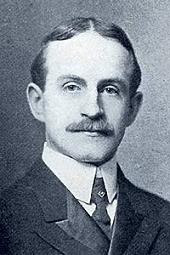
Presbyterian minister and hymnwriter Calvin Weiss Laufer was born today in 1874. He was ordained after graduating from Union Seminary and pastored churches before becoming associated with his denomination's publishing house, which included several of his texts and tunes in their hymnbooks.

In his prose writing, in books such as Key-Notes of Optimism (1911) and The Incomparable Christ (1914) (and probably in his weekly sermons as well) he preached a theology of God's love and our service to others.  Some critics thought his views were overly simplistic but he wasn't writing for them.

The first chapter of Key-Notes of Optimism is titled If Not in the Choir, Sing Where You Are, and concludes with these words:

So begin the day with a song. Sing where you are! Every true note pierces the sky and, if no other, God's ear will hear it and understand.

We have already seen his tune LITTLEFIELD here on the blog but today it's matched with the text he originally wrote for it.

My service, God, I give to thee
In humble faith and loyalty,
To be thine own in what is planned,
And heed with joy thy love’s command.

Show me the trails that turn and climb
Through lonely deeps to heights sublime,
Yet never lose their touch with life,
Its endless round of peace and strife.

I pray for tasks that ease the load
On other hearts along the road;
For love forgiving, patient, tried,
To quicken faith and hope beside.

Gird me with light whose rays and heat
Shall blaze a path to thy blest seat,
That halting steps, no more afraid,
May reach the goals for which they’ve prayed.

O grant me grace to serve with thee
In love unfailing, pure, and free;
Guide me in trails which few have trod,
Whose winding ways lead home to God.

Calvin Weiss Laufer, 1918; alt.
Tune: LITTLEFIELD (L.M.)


Three Years Ago: Calvin W. Laufer

Six Years Ago: Calvin W. Laufer

Eight Years Ago:  Calvin W. Laufer

Sunday, April 27, 2014

A World Renewed to Life


The season of Easter links resurrection with new life and rebirth,  and sometimes with the season of spring as well.  It's been a long winter in many places in the US and we're ready for all these things, so I like that we have several more weeks of the Easter season.

A trip to a local library book sale yesterday yielded two interesting hymnals, one of them being Hymns of the Kingdom of God (1910), edited by Henry Sloane Coffin and Ambrose White Vernon.  This was a nondenominational hymnal, described in the Preface as "a small collection of large hymns" (small in its own time, perhaps, but it includes 488 hymns, which we probably wouldn't call small today).  Coincidentally, the Preface is dated Easter 1910, and so I looked for something new and different (to me) for the season.  The thing I like about today's text is that it's not just about the Easter story, it's about going out and telling the good news of the resurrection.

Proclaim to all, both far and near
That Christ is ris'n again;
That he is with us now and here,
And ever shall remain.

And what we say, let all this morn,
Go tell it to their friends,
That soon in every place shall dawn
Christ's reign, which never ends.

The earthly paths that Jesus trod
To heav'n at last shall come,
And all who hearken to the Word
Shall reach God's promised home.

He lives! His presence has not ceased,
Though foes and fears be rife;
And thus we hail in Easter’s feast
A world renewed to life!

Friedrich von Hardenberg, 1799;
tr. Catherine Winkworth, 1858; alt.
Tune: MAGNIFY (C.M.)

Calvin W. Laufer, 20th cent.

OK, the word "rife" is probably not the most user-friendly of terms, and I'm not sure modern hymnwriters should use it, but I do like the rest of that stanza.

I've had a copy of this hymnal downloaded from the internet for some time, but there's really no more convenient substitute for holding the book in your hand and leafing through it.

In the spirit of Eastertide I hope to bring some new life of my own to the blog here.  Hope someone out there is still listening.

Saturday, April 6, 2013

Calvin W. Laufer

Today we celebrate the birthday of Presbyterian minister and hymnologist Calvin Weiss Laufer (April 6, 1874 -September 21, 1938).  I have been reading his book Hymn Lore (1932) which tells the stories of fifty different hymns which he considered significant at that time.  

The introduction of the book, by the Reverend Park Hays Miller, tells a bit more about Laufer's biography than I had encountered previously.

The author of this book has been peculiarly fitted for his take.  At the age of nine he learned to play the reed organ in his home.By the time he was eleven he was organist in his Sunday School.  At twelve he took lessons on the piano, and later on the pipe organ.  During his student days he paid his way by teaching music.  He presided at the organ in the college chapel and was also a church organist.  Later, as a pastor he  gave special attention to the development of music and worship in his church.

Miller goes on to cover the facts of Laufer's career which we have already covered here, including his writing of hymns and composition of hymn tunes, and of course his editorial work for the Presbyterian Board of Christian Education.

Today's tune by Laufer was published in 1918.  It is perhaps a bit too much of its time to be used again in a modern setting, but it's not wholly without merit either.

Eternal One, thou living God,
Whom changing years unchanged reveal,
With thee their way our forebears trod;
The hand they held, in ours we feel.


The same our trust, the same our need,
In sorrow’s stress, in duty’s hour;
We keep their faith, by thee decreed,
That faith the fount of all our power.


We bless thee for the growing light;
Th’advancing thought, the wid’ning view,
The larger freedom, clearer sight,
Which from the old unfolds the new.


With wider view, come loftier goal;
With fuller light, more good to see;
With freedom, truer self control,
With knowledge, deeper reverence be.


Anew we pledge ourselves to thee,
To follow where thy truth shall lead;
Afloat upon its boundless sea,
Who sails with God is safe indeed!


Samuel Longfellow, 1876; alt.
Tune: LITTLEFIELD (L.M.)
Calvin W. Laufer, 1918

Unfortunately, Laufer's work overall has not survived well.  The new Presbyterian hymnal, Glory to God, which will be published later this year, apparently only contains one of his tunes (HALL) and none of his texts.  It was disappointing to hear, a few years back, that the committee producing the new hymnal  had only looked back as far as The Hymnbook, published in the 1950s, for their material.


Three Years Ago: Calvin W. Laufer

Five Years Ago: Calvin W. Laufer

Sunday, August 26, 2012

Because God Leads the Way

In many churches today one of the assigned readings was Psalm 34. Today's hymn by Presbyterian hymn writer and composer Calvin Laufer is not really a paraphrase of that psalm, but it takes some of its language as a starting point.


O magnify the Lord with me,
All ye that bear God's name;
Whose faithfulness and sovereignty
Forever are the same.

God is the soul’s unfailing spring,
Its full orbed summer noon;
The autumn of its harvesting,
Its winter’s restful boon.

All times and seasons of the soul,
Revolve God's will around;
The universe itself pays toll
To make its life abound.

So is its life secure and free
Because God leads the way;
At length it shares eternally
With God the perfect day.

O sing with me, both young and old,
Of God's unchanging ways;
And let God's goodness manifold
Forever be our praise.

Calvin W. Laufer, 20th cent.; alt.
Tune: MAGNIFY (C.M.)

Calvin Weiss Laufer (1874-1938) was for many years the editor of musical publications for the Presbyterian Board of Christian Education and worked on several hymnals and songbooks, including the denomination's Hymnal of 1933.   Unfortunately, his hymns are no longer much used; I believe that only his tune HALL is included in Glory to God, the new Presbyterian hymnal coming out next year.


Monday, May 31, 2010

The Feast of the Visitation

Today marks the commemoration of the Visitation, the story told in Luke 1:39-56 of Mary's visit to Elizabeth that ends with the famous song we know as the Magnificat.

The Magnificat has been sung throughout history, though mostly in basic prose translations. It is a part of the Matins liturgy of the Eastern Orthodox Church, and Vespers (sometimes called Evening Prayer or Evensong) in the Western Church. Hundreds of musical settings (if not more) have been composed, a fraction of which you can see at the ChoralWiki, and it has also been sung to simpler Anglican chant.

Most modern commentary on the Magnificat emphasizes the revolutionary theme of the text, how God will turn things upside down, raising up the fallen and casting down the oppressive powers of the world. This has inspired contemporary hymnwriters such as Timothy Dudley-Smith, in his hymn Tell out, my soul, which appears in many newer hymnals, and Miriam Therese Winter, in My soul gives glory to my God.

The earliest metrical version which was sung as a hymn may be this one from the Scottish Psalter of 1650 (slightly adapted).

My soul and spirit, filled with joy,
My God and Savior praise,
Whose goodness did from poor estate
This humble servant raise.

Me blessed of God, the God of might,
All ages shall proclaim;
From age to age God's mercy lasts,
And holy is God's name.

A pow'rful arm th'Almighty showed;
The proud God's looks abased;
God cast the mighty to the ground,
The meek to honor raised.

The hungry with good things were filled,
the rich with hunger pined;
God sent to blessed Israel help,
And mercy called to mind.

Which to our forebears' ancient race
God's promise did ensure,
To Abraham and Sarah's line,
Forever to endure.

Scottish Psalter, 1650; alt.
Tune:
MAGNIFY (C.M.)
Calvin W. Laufer, 20th cent.


This tune by Calvin Laufer (with a rather appropriate name) was not actually written for this text, but for one he wrote, O magnify the Lord with me.


Tuesday, April 6, 2010

Calvin Weiss Laufer

Presbyterian minister and hymnographer Calvin Weiss Laufer was born today in Brodheadsville, Pennsylvania in 1874. Following his graduation from Union Seminary in 1900 he was ordained into the Presbyterian ministry and led congregations in New York and New Jersey for several years.

Laufer had a generally cheerful outlook on his Christian life, and his first two books, Key-Notes of Optimism (1911) and The Incomparable Christ (1914) expressed that viewpoint. A review of the first book spoke of the "crisp and stirring note in these sermonettes which is well calculated to rouse the mind of readers and banish dejection." His books were popular in their time but today are seen as somewhat superficial.

He later began to work with the Presbyterian Board of Christian Education and became its editor of musical publications, producing books such as The Junior Church School Hymnal (1927), The Church School Hymnal for Youth (1928) and When the Little Child Wants to Sing (1935). He was also the associate editor of the Presbyterian Hymnal of 1933, a very popular book which was used in many churches for more than fifty years.

In 1932, his book Hymn Lore was published, which contained the stories of fifty hymns from The Church School Hymnal for Youth, with information about their writers and composers (much like this blog). He chose a broad range of hymns, some quite modern and others well-known and loved for centuries. Several of them were by his mentor and friend Louis F. Benson, who had edited the Presbyterian Hymnal of 1895 and its 1911 revision (and also wrote The Best Church Hymns). In the preface to Hymn Lore, Laufer wrote:

To live with hymns and to make them one's own is the only sure way of appreciating their literary beauty and spiritual power. (...) That the reading and singing of hymns may become less mechanical, more thoughtful and intelligent, and emotionally more effective, this volume is released to the public.

Laufer wrote both hymn texts and tunes himself, most of which first appeared in the books he edited but also had some life outside Presbyterian circles. This tune was written while Laufer was attending a conference in Kansas, though with no particular text in mind. Not long after, he hummed it to a friend, William H. Foulkes, who then wrote the text Take thou our minds, dear Lord. The tune suits this communion text as well, I think.

Here at thy table, Christ, this sacred hour,
O let us feel thee near, in loving power,
Calling our thoughts away from grief and sin
As to thy banquet hall we enter in.

Sit at the feast, dear Friend, break thou the bread;
Fill thou the cup that our souls shall be fed;
That we may find in thee pardon and peace,
And from all bondage win a full release.

So shall our life of faith be full, be sweet;
And we shall find our strength for each day meet;
Fed by thy living bread, all hunger past,
We shall be satisfied, and saved at last.

Come then, O holy Christ, feed us, we pray;
Touch with thy piercèd hand each common day;
Making this earthly life full of thy grace,
Till in the home of heaven we find our place.

May Pierpont Hoyt,19th cent.;alt.
Tune:
HALL (10.10.10.10.)
Calvin W. Laufer, 1918


Laufer's tune was originally called STONY BROOK, but he changed it to honor a friend, William Ralph Hall. Little is known about the writer May Pierpont Hoyt. Her text is generally sung to the tune BREAD OF LIFE by William F. Sherwin, but since that tune is more known with Break thou the Bread of life, this text could use a different one.


Two Years Ago: Calvin Weiss Laufer


Sunday, October 19, 2008

More Voices Found: Emily Swan Perkins

Composer and hymnwriter Emily Swan Perkins was born today in 1866. Though she was musically gifted from an early age, she did not start writing hymns until later in life.

During World War I she served with the Red Cross, and wrote text and tune for a hymn of thanks for that organization (possibly one of her first). The first verse:


A blessed ministry of love
Goes forth to all the world,
For every nation, every tribe
The Red Cross flies unfurled.
Oh! come, ye people everywhere,
Its love and power and worth declare.

In 1921 she published Stonehurst Hymn Tunes, a book of 38 of her tunes and four of her texts. She writes in the introduction:

Old tunes are being used with a fair measure of success, but the new wine cannot always be contained in the old bottles. A really great hymn must have its own tune and any hymn of worth should have proper setting if its message is to gain full interpretation.

Many of the tunes in her collection are written for familiar texts, and some to more obscure ones that she hoped would gain more exposure. Yesterday's tune by Perkins, LAUFER, was written for the hymn The light of God is falling, by Louis F. Benson. Benson was pleased with the tune, and used it in a published collection of his hymns, but he admitted in a letter to Perkins that it would be difficult to supplant GREENLAND, the tune that his hymn had originally, and usually, been matched with. LAUFER was named for another friend of Perkins, Presbyterian hymnist Calvin Laufer.

Here is another tune from her first collection.

Years are coming, speed them onward
When the sword shall gather rust,
And the helmet, lance, and arrow
Sleep at last in silent dust.

Earth has heard too long of battle,
Heard the trumpet's voice too long.
But another age advances,
Seers foretold in ancient song.

Years are coming when forever
War's dread banner shall be furled,
And the angel Peace be welcomed,
Regent of a happy world.

Hail with song that glorious era,
When the sword shall gather rust,
And the helmet, lance and arrow
Sleep at last in silent dust.

Adin Ballou, 1849; alt.
Tune: PETERSON (8.7.8.7.)
Emily S. Perkins, 1921

Emily Perkins published another collection, Riverdale Hymn Tunes, in 1938, three years before her death, presumably containing a similar number of new tunes. Unfortunately, not many of her tunes were published in other hymnals (there are only three available to be heard at the Cyber Hymnal site), but I think they should be reevaluated. Surely out of possibly 60+ tunes there are more than three worth using. Has anyone out there heard any of the others?

In 1922, Perkins was one of the instrumental founders of the Hymn Society of America, (later renamed the Hymn Society in the United States and Canada), an organization that would help her share her love of hymnody with thousands of people throughout the world. She served as Corresponding Secretary of the group for nearly two decades.

P.S. We will hear more about Adin Ballou on his birthday a few months from now. His hymn has been used many times in recent years, as evidenced by several worship services for peace than can be found online.

Sunday, April 6, 2008

Calvin W. Laufer

Calvin Weiss Laufer was born on this day in 1874. After graduating from Union Seminary in 1900, he became a Presbyterian minister and later worked as the associate editor of the Presbyterian Hymnal of 1933. He wrote several hymns (both texts and tunes, sometimes together and sometimes separate), but this is the one I like best.

We thank thee, God, thy paths of service lead
To blazoned heights and down the slopes of need;
They reach thy throne, encompass land and sea,
And we who journey in them walk with thee.

We’ve sought and found thee in the secret place
And marveled at the radiance of thy face;
But often in some far off Galilee
Beheld thee fairer yet while serving thee.

We’ve felt thy touch in sorrow’s lonely way
Abound with love and solace for the day;
And, ’neath the burdens there, thy constancy
Has held our hearts enthralled while serving thee.

We’ve seen thy glory like a mantle spread
O’er hill and dale in saffron flame and red;
But in the eyes of all, redeemed and free,
A splendor greater yet while serving thee.

Calvin W. Laufer (text and tune), 1919; alt.
Tune: FIELD (10.10.10.10)